
When the chance to drop everything and dive headfirst into Oktoberfest presents itself, you don’t hesitate—you just go. We were in the midst of a UK trip, knee-deep in pub culture and cask ales, when the idea struck: why not squeeze in a whirlwind two-day detour to the world’s biggest beer celebration? The airline changed our flight home from London, so a few clicks and a hasty booking later, we found ourselves on a plane bound for Munich, ready to navigate the quick and dirty route to experiencing the grand spectacle of the Wiesn, as the locals call it. This post will guide you through the essentials: how to get from the airport to Munich, where to crash, the fastest way to the festival grounds, and the must-sees at this legendary event. If you’re short on time but big on beer, this is how you do Oktoberfest.

The Party Starts at the Airport
Touching down at Munich Airport (MUC), we were immediately reminded that this city takes its beer seriously—so much so that there’s a brewery right in the airport itself. Airbräu, as it’s called, is one of a handful of airport breweries in the world, offering freshly brewed Bavarian beers that you can sip on while you plan your next move. But as tempting as it was to linger, we were on a mission: two days of Oktoberfest madness awaited.
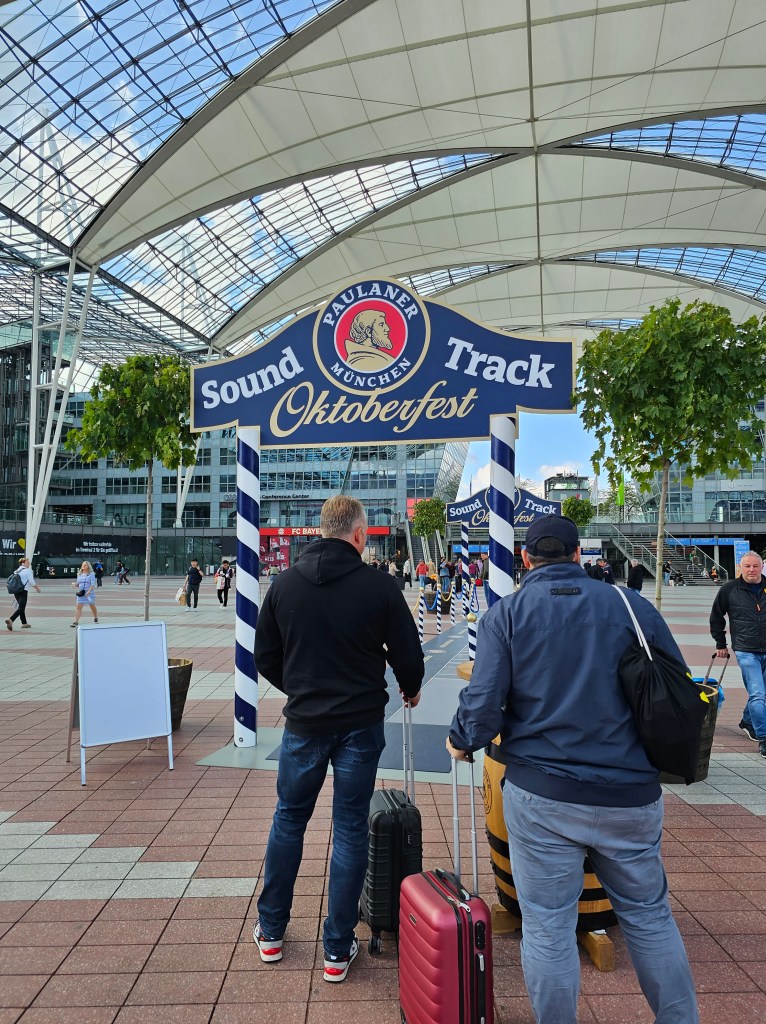
Getting into the heart of Munich from the airport is straightforward but requires a bit of planning, given that the airport is about 40 kilometers (25 miles) northeast of the city. The fastest and most convenient option is the train. The S-Bahn S1 or S8 lines will take you directly to the city center in about 40-45 minutes, depending on where you’re headed. The trains run frequently, and a one-way ticket costs around €11.60, making it an easy and affordable choice.
If you prefer the flexibility of a car, renting one is an option, but bear in mind that Munich traffic can be a beast, especially during Oktoberfest. Plus, parking in the city can be a challenge. Alternatively, you could grab a cab, but be prepared for a fare of around €70-80, given the distance from the airport to the city center. It’s not the most budget-friendly option, but if you’re traveling with a group or just want to get straight to the action with minimal hassle, it could be worth it.
Lastly, there’s the bus. The Lufthansa Express Bus runs every 20 minutes and takes about 45 minutes to reach Munich’s main train station, depending on traffic. A one-way ticket will set you back around €11.50, making it comparable to the train but with the added bonus of seeing a bit more of the city en route. Whichever mode of transport you choose, you’ll soon find yourself in the midst of Munich’s lively streets, ready to dive headfirst into the festival.
The Reason We’re Here
Oktoberfest, or as the locals know it, die Wiesn, is far more than just a beer festival—it’s a 200-year-old tradition rooted deep in Bavarian culture. The story begins in 1810 when Crown Prince Ludwig, who would later become King Ludwig I, married Princess Therese of Saxe-Hildburghausen. The citizens of Munich were invited to join in the festivities, which included horse races held in the fields in front of the city gates. These fields were later named Theresienwiese (Theresa’s Meadow) in honor of the princess, and it’s this very spot that has hosted Oktoberfest every year since.

What started as a royal celebration quickly became an annual event, evolving over the decades into the massive festival we know today. The horse races are long gone, but the spirit of the celebration remains, with beer at the heart of it. By the late 19th century, beer stands had transformed into large beer tents, and local breweries began brewing special Märzen beer, a stronger, more flavorful lager designed to last through the winter months. This beer, traditionally brewed in March and stored in cool cellars, became the star of the festival.
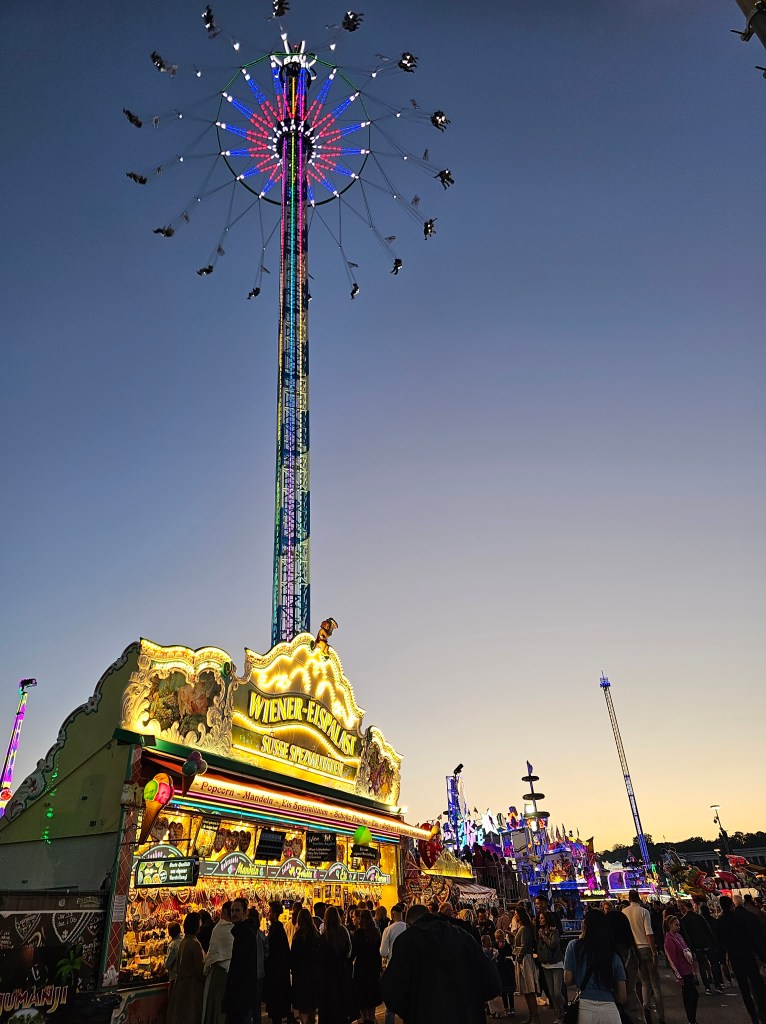
Over the years, Oktoberfest has seen its share of challenges, from wars to economic downturns and even pandemics. But the resilience of the festival is a testament to its importance in Bavarian culture. Even when it was canceled, as it has been several times throughout history, the spirit of Oktoberfest lived on, with smaller celebrations and gatherings keeping the tradition alive. Today, the festival runs for 16-18 days, starting in mid-September and ending on the first Sunday in October, attracting millions of visitors from all corners of the globe.

Despite its global fame, Wiesn remains deeply rooted in local tradition. It’s not just about the beer—though that’s a huge part of it—it’s also about celebrating Bavarian heritage, from the traditional costumes of lederhosen and dirndls to the folk music that fills the tents. Each year, Munich’s mayor kicks off the festivities with a ceremonial tapping of the first keg, shouting, “O’zapft is!” (“It’s tapped!”), marking the official start of the festival. For both locals and visitors, Wiesn is a time to come together, celebrate life, and, of course, raise a stein to good beer.

Festival Highlights
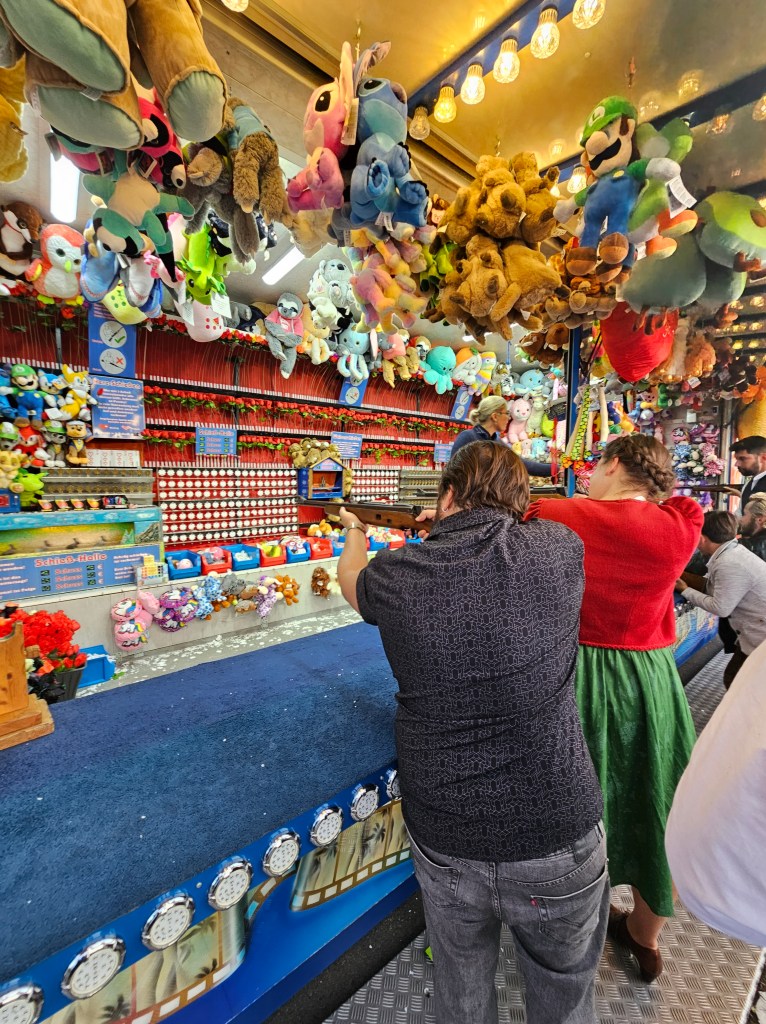
Our first night at Oktoberfest was a nostalgic reunion with Melanie, an old friend and Munich local who knows the festival like the back of her hand. She treated us to an insider’s tour of the traditions she grew up with. We started with a fun round of shooting, where David showed his skills and won me the only souvenir that we have from the festival, a small stuffed bear.
Melanie then took us to one of the festival’s classic attractions, the toboggan. It’s a feat to make it up the moving incline without landing flat, as David so graciously demonstrated—there’s now a video of him riding up flat on his back, after Charlie Chaplin-esque falling antics, that lives rent free in my head forever.

We spent the rest of the evening in true Bavarian fashion at the Augustiner Festhalle, which is beloved by locals for its laid-back atmosphere and pure, unpasteurized beer served straight from wooden barrels. It’s the kind of place where you truly feel the spirit of Oktoberfest: endless rows of tables, camaraderie with strangers, and a brass band that could raise the dead.

After the beer tents closed at 10:30 PM (something many people don’t realize until they’re asked to finish their last Maß), we wandered over to a wine tent. It turns out that when the beer stops flowing, many people migrate to wine tents or underground cellars that stay open a bit later—perfect for squeezing in a final toast before calling it a night.


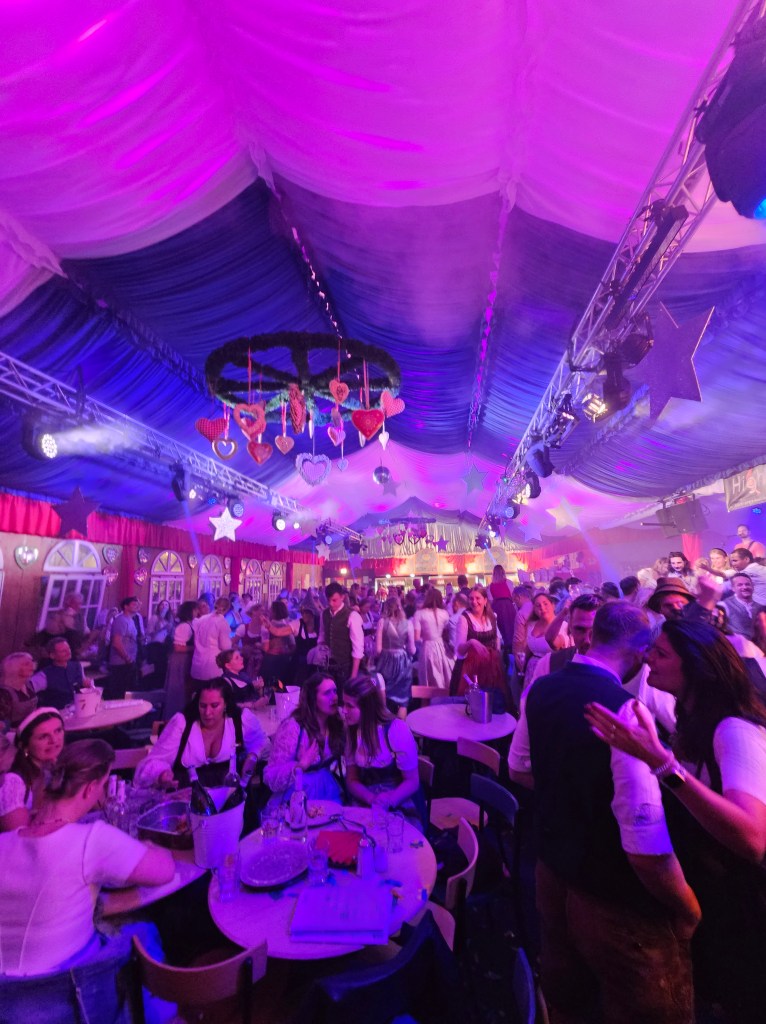

The next day, we joined a guided tour that promised table reservations and an insider’s view of Oktoberfest’s rich history. While we almost missed it due to our late night, we rallied in time for a daytime exploration of the festival grounds.
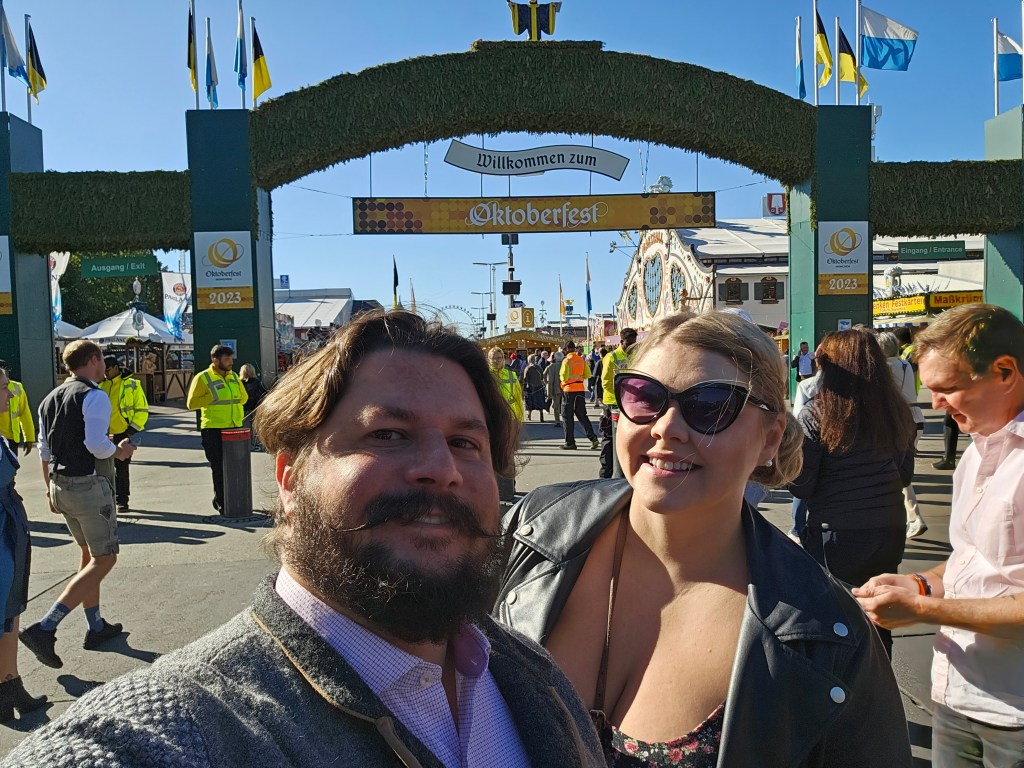
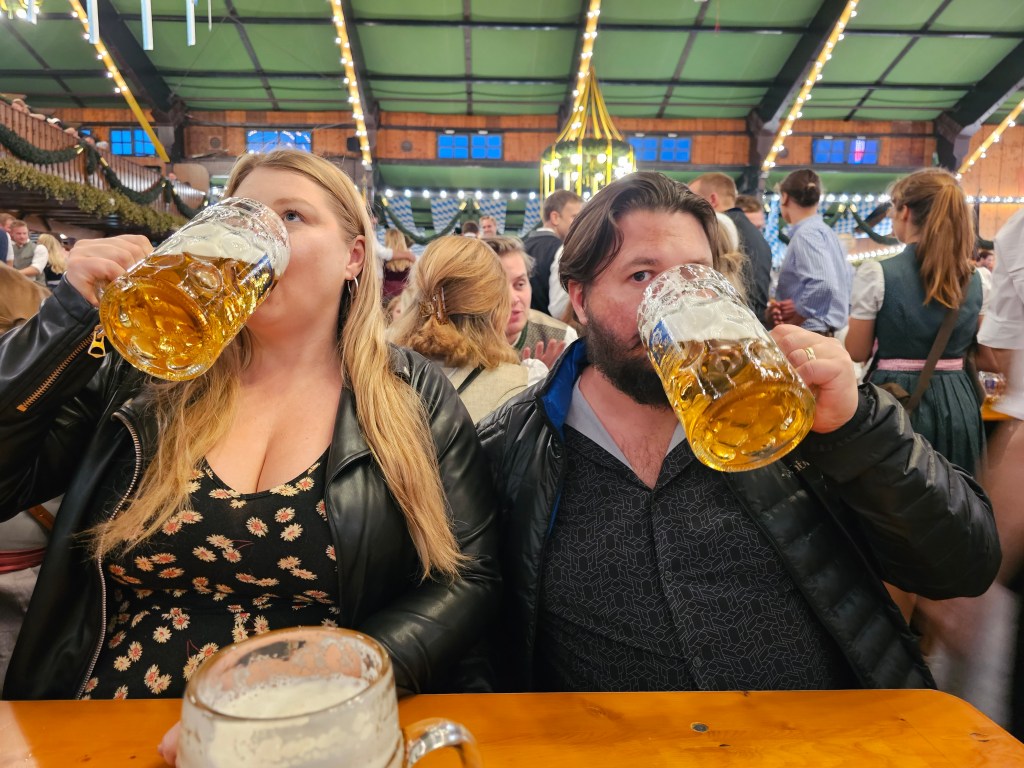
The tour included a hearty meal and two Maßkrug of beer in the Schottenhamel Festhalle. For those not in the know, we Americans often call these massive glass mugs “steins,” but in Germany, “Stein” actually refers to stoneware mugs, which we would encounter later. Schottenhamel is the oldest, most traditional tent at Oktoberfest, and it’s where the festival officially kicks off each year. The mayor of Munich taps the first keg with the iconic phrase, “O’zapft is!” (It’s tapped!), and only then does the beer flow for the rest of the tents.


Feeling bold after our meal and beer, we ventured onto Teufelsrad (The Devil’s Wheel), an old-school ride that involves sitting in the center of a spinning platform while the operator tries to knock you off—needless to say, it’s a riot to both watch and experience.
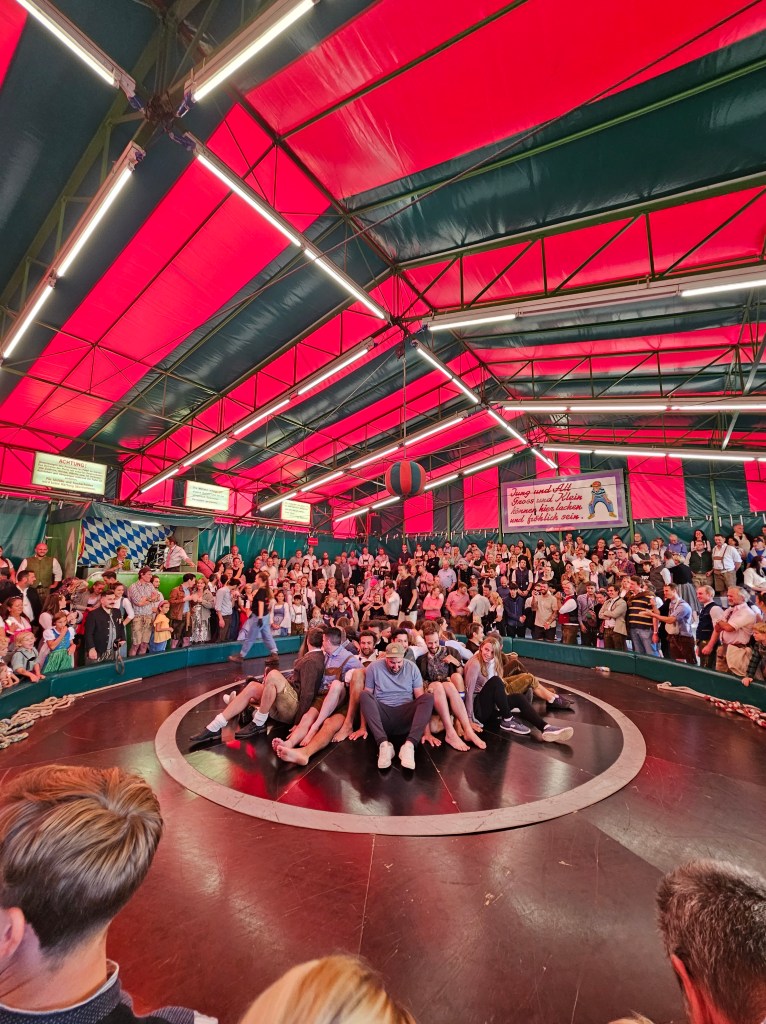
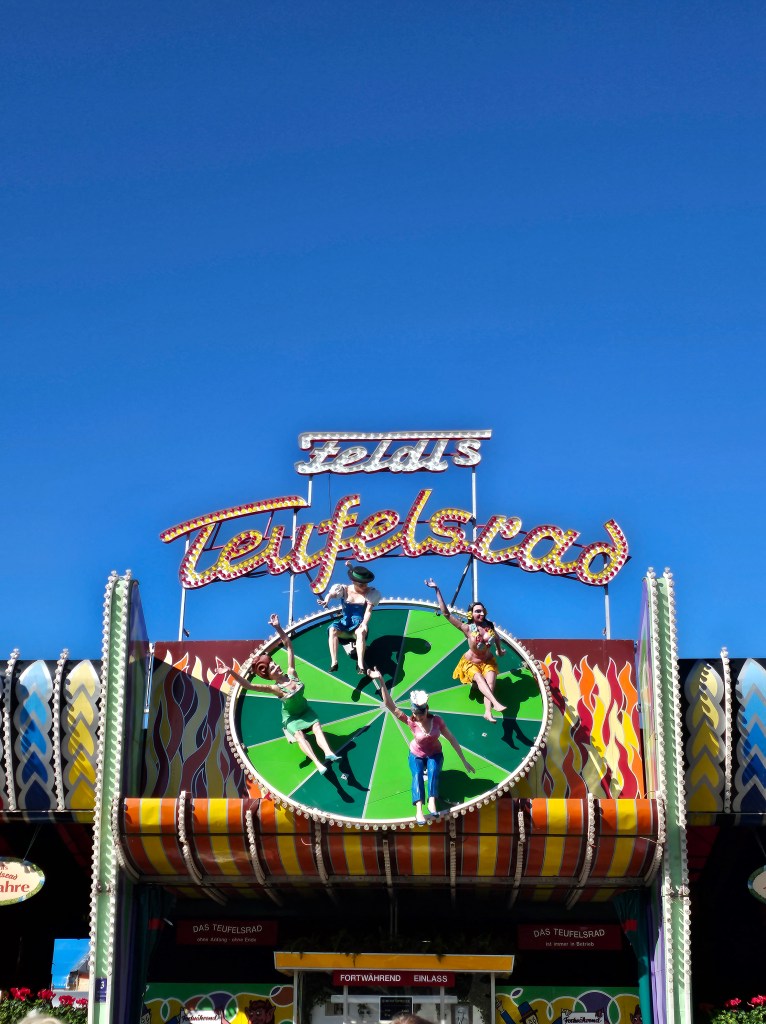
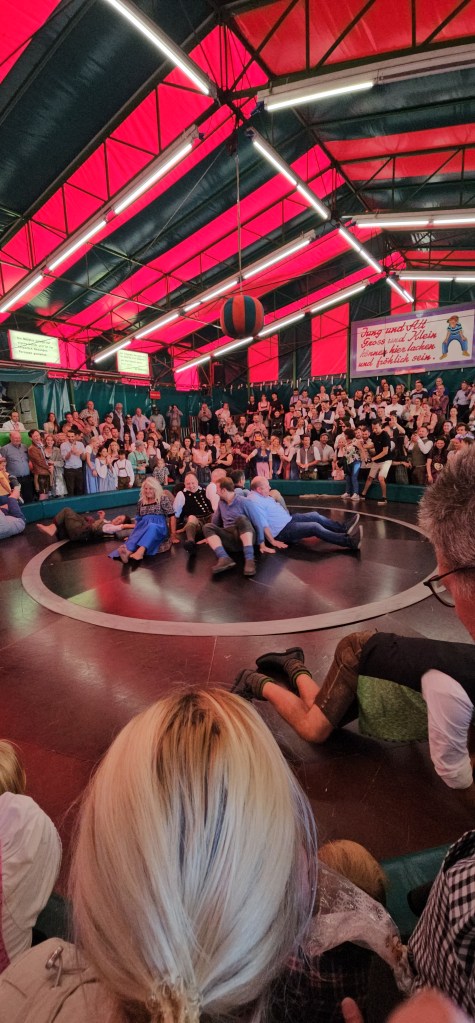
From there, we bounced between other tents, soaking in the music and atmosphere, but the real magic happened as sunset approached. We parted ways with our tour group and made our way to the “Oide Wiesn,” the Old Oktoberfest. This more traditional section of the festival offers a taste of how Oktoberfest used to be, complete with historical rides and those famous stone steins of beer.
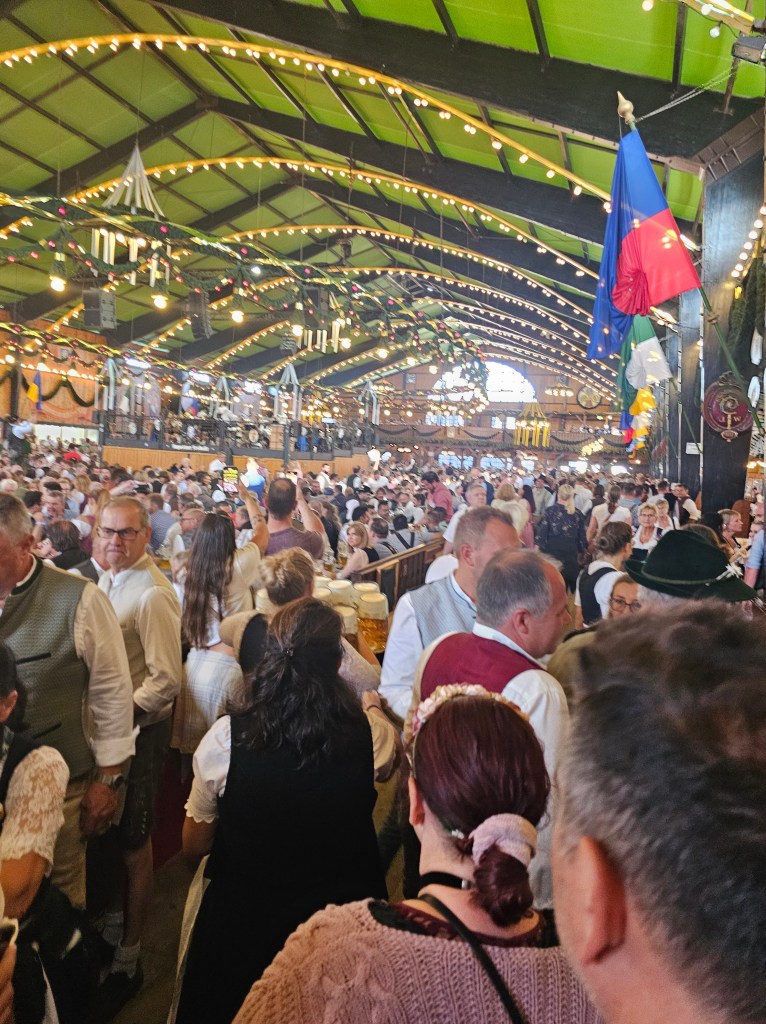


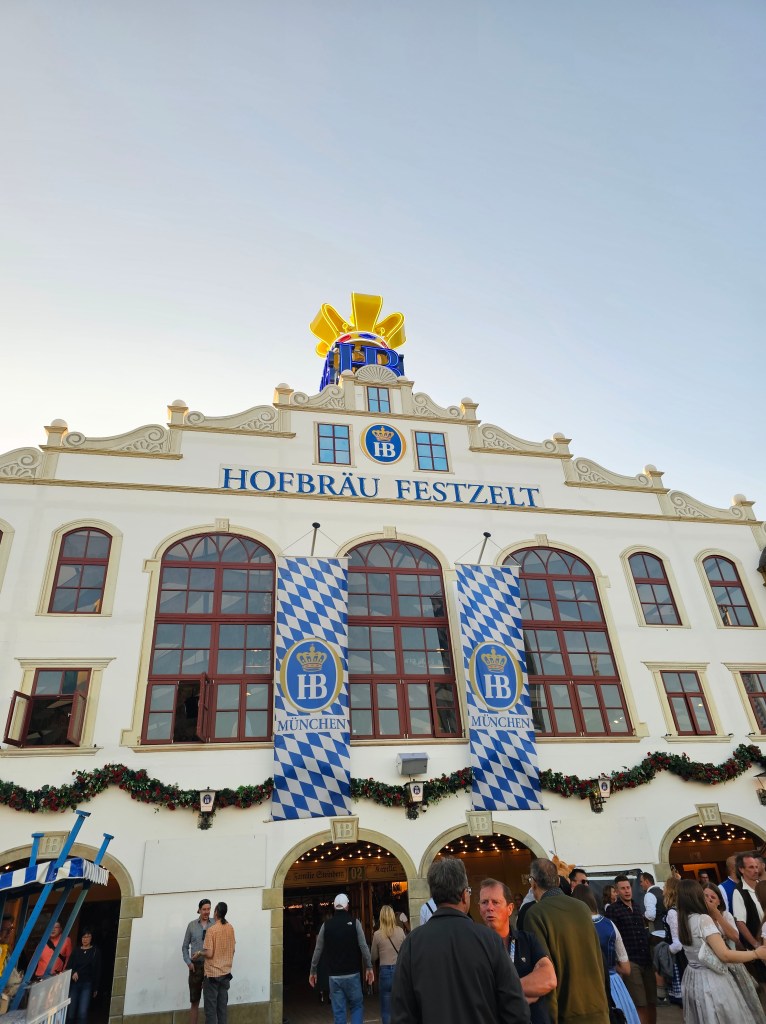

As the night wore on, we couldn’t resist one last thrill: the Geister Palast, one of Oktoberfest’s many spooky rides. A haunted house in the middle of a beer festival is somehow the perfect ending to a whirlwind day. After a few heart-pounding moments in the dark, we caught the metro back to our hotel, exhausted but already planning how we’ll do it all again next year.

A Place to Rest Our Heads
We spent two nights at Hotel Atlanta in Munich, a perfectly situated spot just a short walk from the heart of the city. Being so close to the main square, Marienplatz, we easily explored some of the top sights, including the historic Glockenspiel and Viktualienmarkt. Public transportation options were also plentiful, with a nearby station making it simple to reach Theresienwiese, the Oktoberfest grounds. Despite how close everything was, we barely needed to use transit. The friendly staff welcomed us warmly, though we have to admit, we didn’t take advantage of the included breakfast (Oktoberfest can do that to you!). Hotel Atlanta made for a convenient and comfortable home base in Munich.

Munich Sightseeing
With a few hours to spare before diving back into the Oktoberfest madness, we decided to explore Marienplatz, Munich’s central square. Steeped in history, Marienplatz has been the heart of the city since 1158. The square’s name comes from the Mariensäule, a column topped by a golden statue of the Virgin Mary, erected in 1638 to celebrate the city’s survival of Swedish occupation during the Thirty Years’ War. Dominating the square is the stunning Neues Rathaus (New Town Hall), with its neo-gothic façade and iconic Glockenspiel. If you’re lucky, you can catch the Glockenspiel’s performance, which reenacts stories from Munich’s past with life-sized figures—touristy, yes, but still a charming slice of Bavarian history. The square is flanked by bustling shops and cafés, making it the perfect spot to soak in the energy of the city.

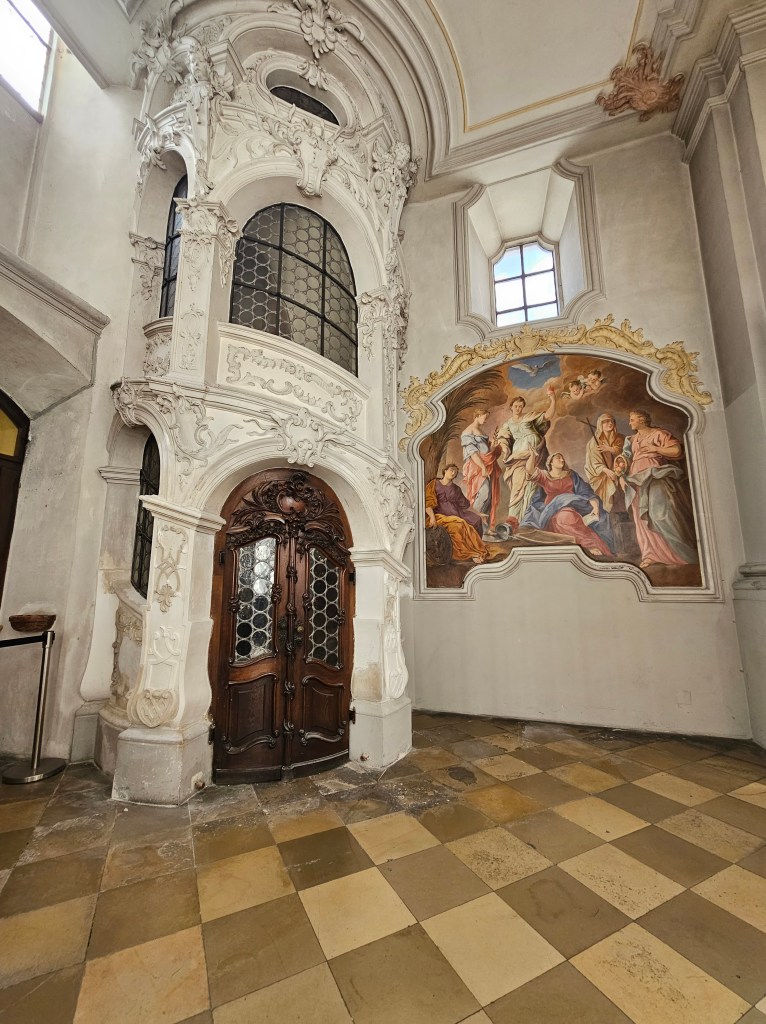
Just a short walk from Marienplatz is the Church of St. Peter, or “Alter Peter” as locals call it. This is Munich’s oldest parish church, with origins dating back to the 12th century. Its tower offers panoramic views of the city, including the Alps on a clear day. For history buffs, the church’s interior is filled with beautiful baroque art, and it’s survived numerous reconstructions, including after heavy bombing in World War II. If you’ve got the stamina, climbing the 299 steps to the top is well worth the reward.


One thing that stood out as we walked around Marienplatz was the sheer number of stores selling traditional Bavarian clothing for Oktoberfest. If you didn’t pack a dirndl or lederhosen, no worries—you can pick one up at shops like Angermaier or Ludwig Beck. However, there’s a difference between authentic garb and what some might call a “costume.” Oktoberfest is a cultural event, and locals take pride in wearing traditional clothing. A true dirndl or set of lederhosen is made with high-quality materials and craftsmanship, while costumes can come off as disrespectful or as though you’re treating a significant tradition as a gimmick. If you’re going to dress up for Oktoberfest, do it right—invest in something real, or skip the costume altogether.

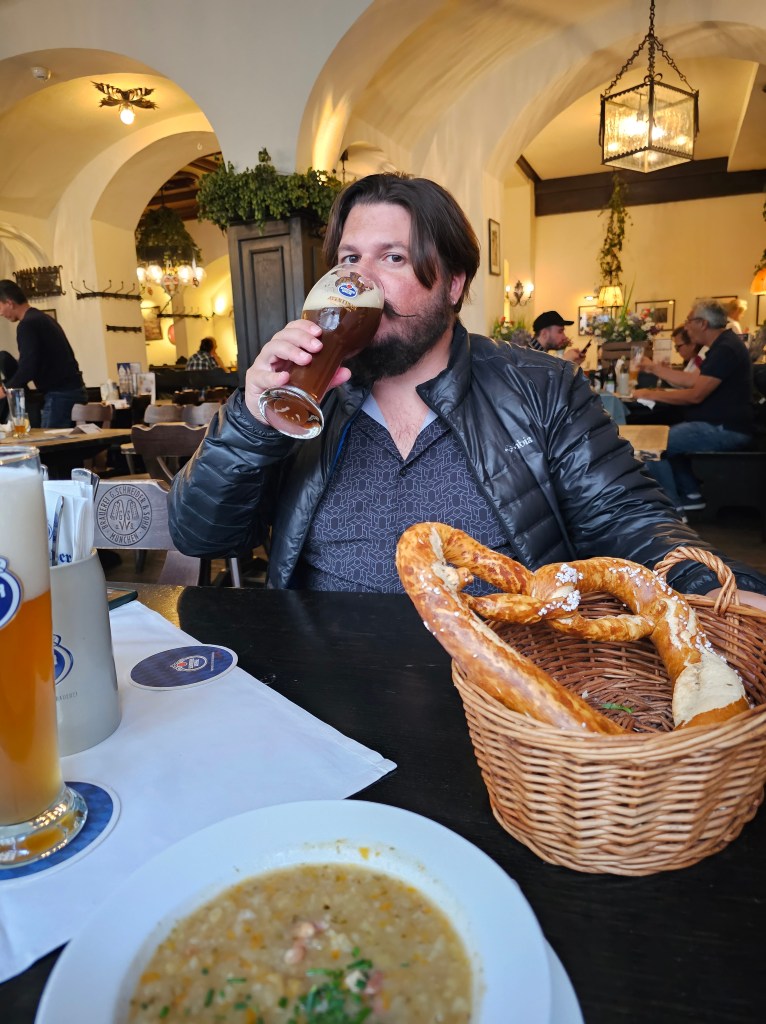
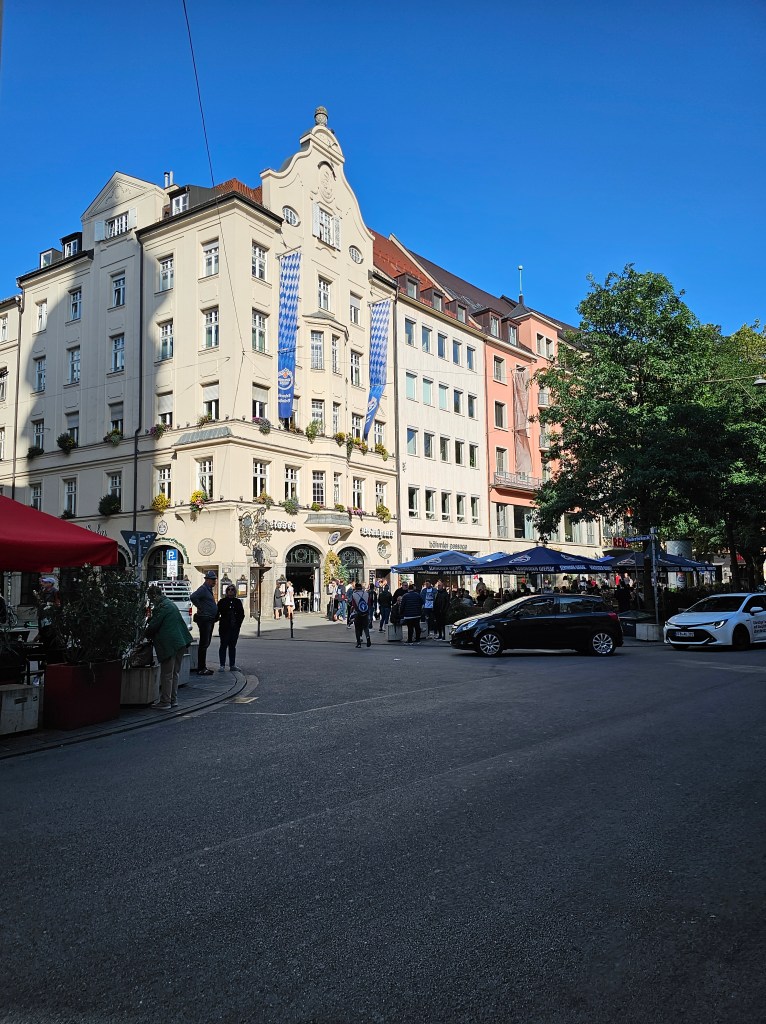
After all that walking, we headed to Schneider Bräuhaus, one of the city’s most beloved breweries. This historic brewery makes David’s favorite beer, Aventinus, a rich, malty weizenbock that’s perfect for fall. We settled into our seats with a round of beers and enjoyed the sounds of a live Bavarian band. The meal was a feast of traditional dishes—festival chicken, giant pretzels, and hearty portions that left us perfectly satisfied. Schneider Bräuhaus is the kind of place where time slows down, and you can savor both the flavors of Bavaria and the lively, warm atmosphere of the beer hall.



Prost to Unforgettable Moments
Looking back on this trip, it serves as a reminder to seize opportunities when they come up. There are dozens of reasons that we could have punched the brakes when this plan started to bubble up, but we threw caution to the wind and had the time of our lives. We will be back in Munich for a longer stay, but for now, the dream of Oktoberfest in Munich has been realized, and that’s pretty spectacular.

 Beer Travelers