
If your Instagram feed is anything like mine in the summer, I’m sure it is filled with perfect snapshots of sun-drenched Europeans coastlines– well, today, we’re taking you through to one via a brief peek at our trip to the breathtaking shores of Amalfi on the Italian coast. Brace yourselves for a captivating blend of history, stunning landscapes, mouthwatering delicacies, and, of course, some bevs.

Unraveling the Historical Threads
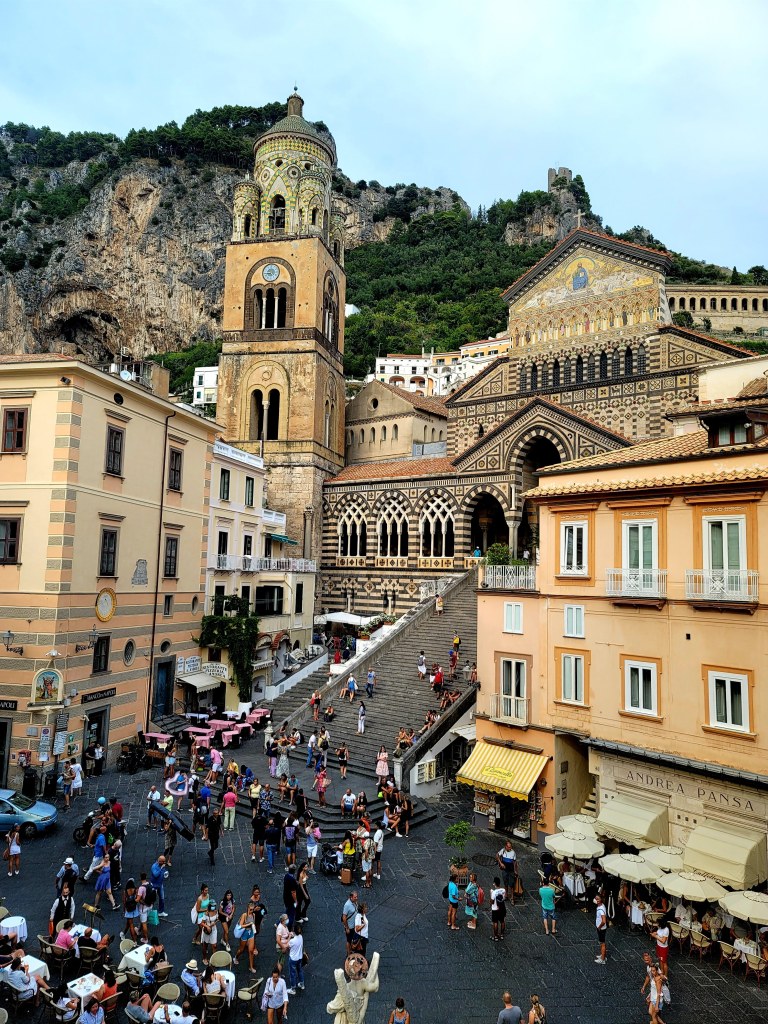
Amalfi boasts a rich history that dates back to ancient times. Originally a flourishing Roman settlement, the town evolved into a maritime powerhouse during the Middle Ages, establishing itself as a prominent maritime republic in the 9th century. Its strategic location in the Mediterranean facilitated extensive trade networks, allowing Amalfi to flourish as a hub of commerce, culture, and innovation. Amalfi’s influence extended far beyond its shores, with its sailors and merchants traversing the seas, establishing trade connections with North Africa, the Middle East, and beyond. This maritime prominence is echoed in the awe-inspiring architecture, including the magnificent Amalfi Cathedral, adorned with intricate mosaics that stand as a testament to the town’s historical significance. As the tides of time shifted, Amalfi’s maritime prominence gradually waned, yet its historical legacy remains palpable through the charming cobblestone streets, the timeless craftsmanship of paper and pottery, and the indomitable spirit of a town that once ruled the waves.

Balcony Views
Our home away from home for this trip was the delightful Hotel Fontana. Nestled within the heart of Amalfi, this charming boutique hotel offered not only comfortable lodging but also easy access to the town’s vibrant life. Waking up to the gentle hum of the bustling streets and watching the town come to life from our balcony is a core memory.
Navigating the Charm on Foot
Amalfi’s intimate size makes it the perfect place to explore on foot. Strolling through its narrow lanes, we discovered hidden gems at every corner. We really enjoyed wandering into the shops, and fell in love with the ceramics from Amalfi.
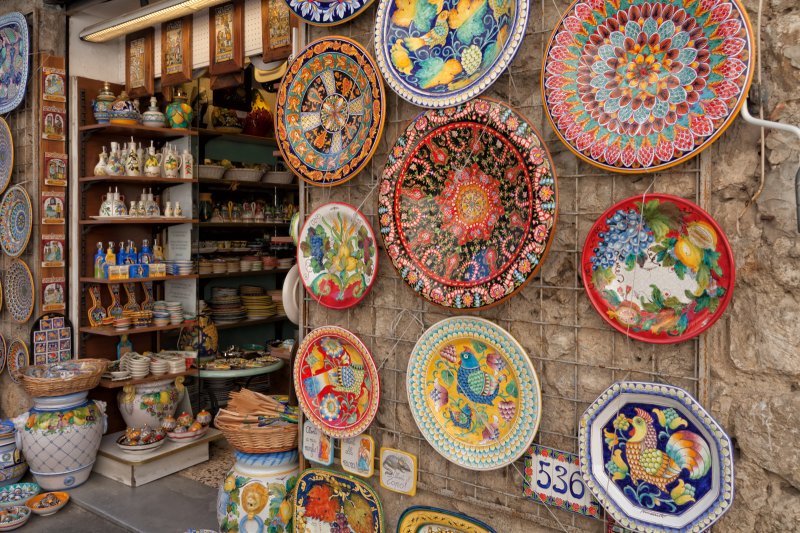
Amalfi is also renowned worldwide for its exquisite paper products, a tradition that dates back centuries. The town’s handmade paper, known as “bambagina,” continues to be celebrated for its quality, unique texture, and historic significance in the realm of Italian craftsmanship.
A Culinary Symphony
Ah, the culinary delights of Amalfi – where do we even begin? One name that rolled off our tongues and into our stomachs was the irresistible (and very Instagramable) cuoppo. Picture this: a cone filled with an assortment of deep-fried seafood treasures, a tantalizing crunch with every bite, and the sea breeze whispering secrets as we devoured our feast next to the Med. And if you’re a fan of fresh seafood, you’re in for a treat – Amalfi’s coastal location ensures that every restaurant worth a visit has dishes that celebrate the sea’s bounty.

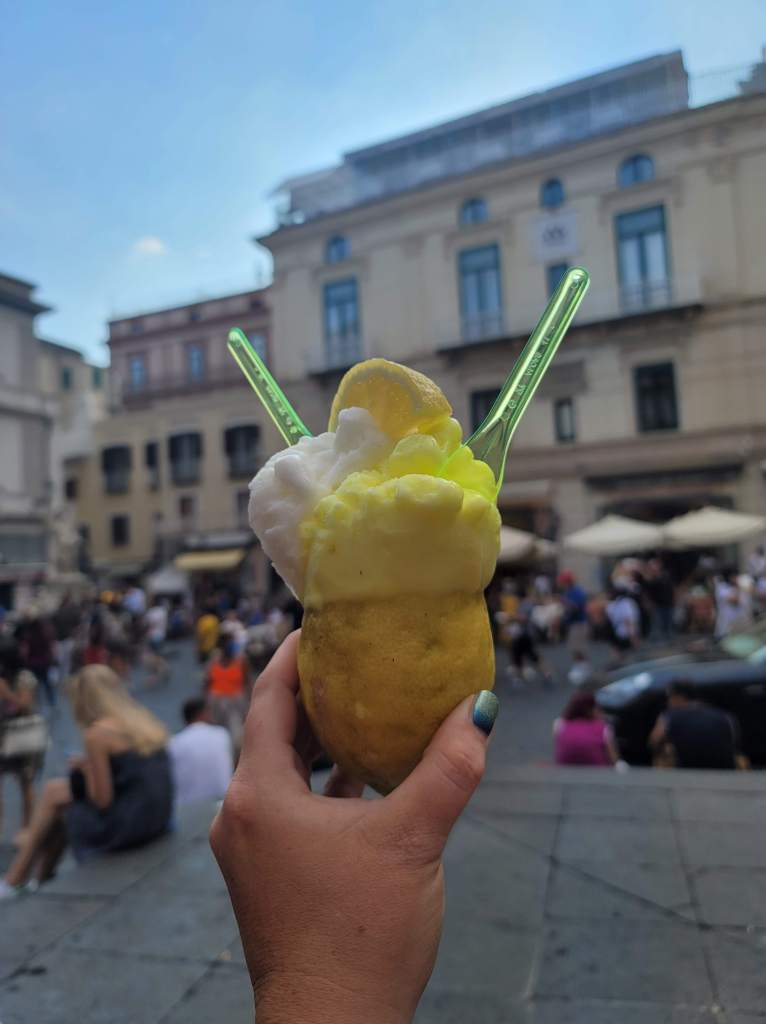
While people watching from our balcony, I kept seeing people walking around and eating something out of the largest lemons that I had ever seen. It didn’t take long for me to find the source, hand over a few Euro, and dive into what turned out to be a lemon filled with lemon sorbet. It was a warm day and the treat cooled me off completely, the perfect amount of tang and sweetness in an adorable (and environmentally friendly) container!
Sipping in Style
Our journey through Amalfi wouldn’t be complete without sipping on some local libations. While the town might be more renowned for its limoncello (yes, made from those iconic Amalfi lemons), we couldn’t resist seeking out some other Italian specialties.
Grappa is a traditional Italian alcoholic beverage made from the pomace, which consists of the grape skins, seeds, and stems leftover after the winemaking process. Its history dates back to the Middle Ages, where it was initially considered a simple, rustic spirit produced by rural communities. The word “grappa” itself is believed to derive from the Latin “grappulum,” meaning “a bunch of grapes.” Over time, grappa evolved from a humble peasant drink to a more refined and widely appreciated spirit. In the 19th century, the distillation process was improved, and grappa gained popularity among Italian aristocracy and urban dwellers. Grappa is typically sipped, not shot. It’s considered a digestif, meant to be enjoyed slowly and savored. Sipping allows you to appreciate the complex flavors and aromas of the spirit. Pour a small amount into a glass and take small sips to fully experience its taste. Drinking grappa in this manner is the traditional and more respectful way to enjoy this Italian spirit. Shooting it quickly may not allow you to appreciate its nuances, and it can be quite strong, so sipping is generally recommended.
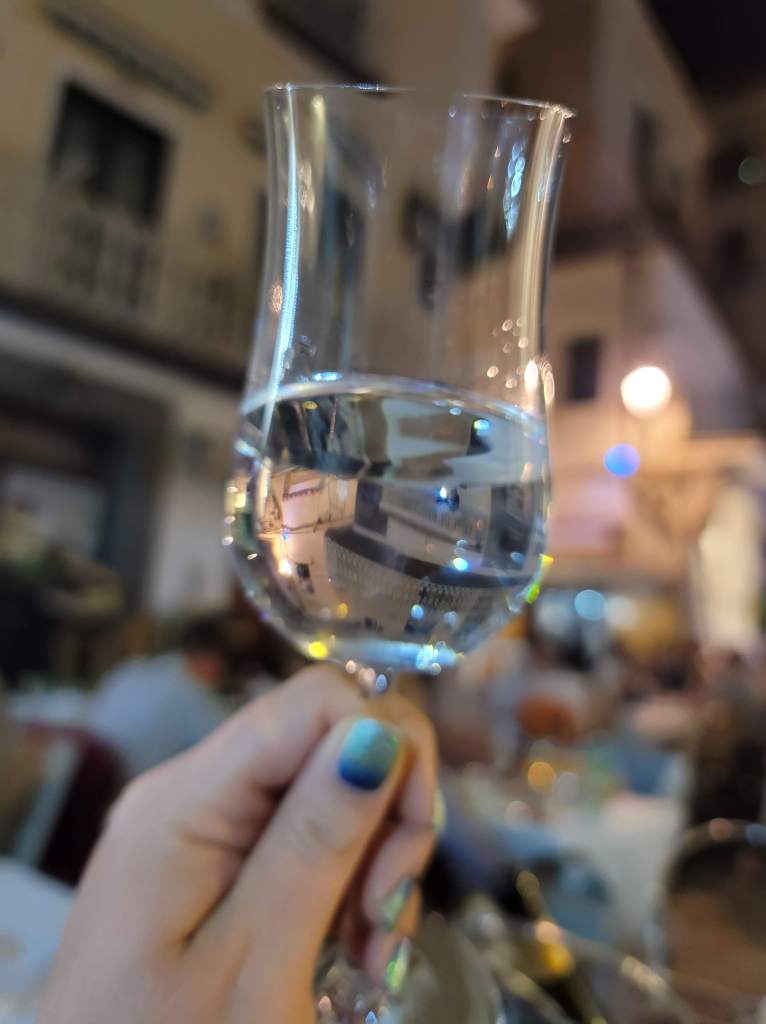
In the evenings, we would take a short stroll down the coastal road to of all places, a juice bar called Life Fruit Bar. Here we would indulge in what came to be our favorite Italian “macro” beer: Ichnusa. Ichnusa, also known as “Birra Ichnusa,” is a popular Italian beer produced by the Heineken Group. It takes its name from the ancient Greek word for Sardinia, “Hyknusa.” Brewed on the island of Sardinia, Ichnusa is has a refreshing and crisp taste. It is a lager that is light and easy to drink, making it a coveted choice among locals and tourists alike.

Positively Positano
While Amalfi was lovely, we couldn’t resist the allure of a nearby hot-spot, Positano. A quick ferry ride whisked us away to this picturesque village, nestled among colorful cliffside homes and turquoise waters. You can expect to pay around 8 to 15 euros for a one-way ferry ticket between Amalfi and Positano and the ride takes between 20 and 30 minutes. The view of the town from the water is like a postcard, it is the best way to see the town for the first time. The ferry system also paves the way for other exciting day trips, letting you unravel the coastal wonders at your own pace.

While in Positano, we got lost in the narrow (and crowded) streets. We found ourselves irresistibly drawn into the numerous art galleries and boutiques and we were quickly reminded that this was a place to see and be seen.
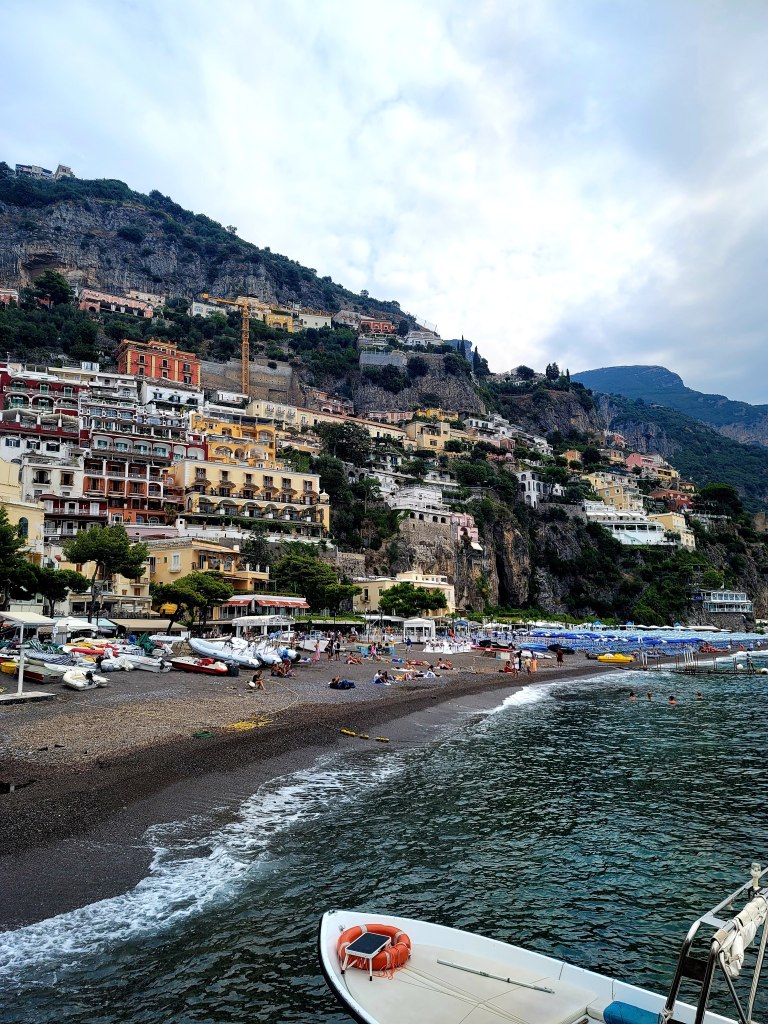
After our art-filled exploration, we made our way down to one of Positano’s idyllic beach clubs. With the sun peeking out of a not-so-typical gray Italian sky, we settled into a cozy spot with a couple of ice-cold beers in hand. The Mediterranean breeze gently cooled us down and we indulged in a perfectly on-the-nose Caprese salad, the freshness of the tomatoes and mozzarella a testament to the region’s culinary prowess.

Obviously, after staring at the sea during our meal, we had to go for a swim. Positano’s beaches are a captivating blend of natural beauty and luxury. While the paid beach clubs offer plush sunbeds, attentive service, and stunning views for a fee of around €20-€30 per day, the free public beach, though more crowded, provides an authentic experience with its coarse sands that lead up to a VERY rocky water entry framed by the azure waters of the sea. Seriously, nothing prepared me for just how painfully rocky the beaches are in this part of the world. I know that I am spoiled when it comes to sandy beaches (I live on the Gulf Coast of Florida) but in no way did I expect to wince my way in and out of the water. We chose to end our day in Positano at the free public beach, the people watching was better, and we didn’t need the amenities of a beach club.

Navigating the Crowds and Traffic
Of course, paradise isn’t without its pitfalls. Summer months tend to draw crowds, and Amalfi is no exception. Streets that once felt like charming mazes can become crowded, and the cozy restaurants might require a bit of patience. And let’s not forget the quirky traffic laws that can leave even the most experienced drivers scratching their heads, there are passes that allow certain vehicles to drive on specific days, if you don’t have the correct pass, you will be fined. Luckily, we didn’t face any fines but on our way to the train station, we did hit an unfortunate but semi-common traffic snafu on the coastal road. We had an early morning train ride to Venice from Salerno, an hour south of Amalfi along the coastal road. Our driver, with an appropriate surname of of Veloce (fast in Italian), picked us up two hours before our train was set to depart and we were on our way. The ride was going smoothly enough until we hit a slow down in one of the tunnels. Our driver stopped and joined the other Italian men, hands clasped behind their backs, staring at a broken down car that was blocking traffic on a two-lane road in both directions. Cars on either side of the small tunnel could not get past this car, thus a massive traffic slowdown occurred for what I’m assuming was hours. Our driver soon got back in the car, turned the vehicle around, and lived up to his name by driving over the mountains and around to Salerno, getting us to the train one minute before the doors closed. It was an exciting end to our time in Amalfi but also a reminder to pad your time in this area, things move a little slower (unless you are riding with Veloce).


 Beer Travelers