
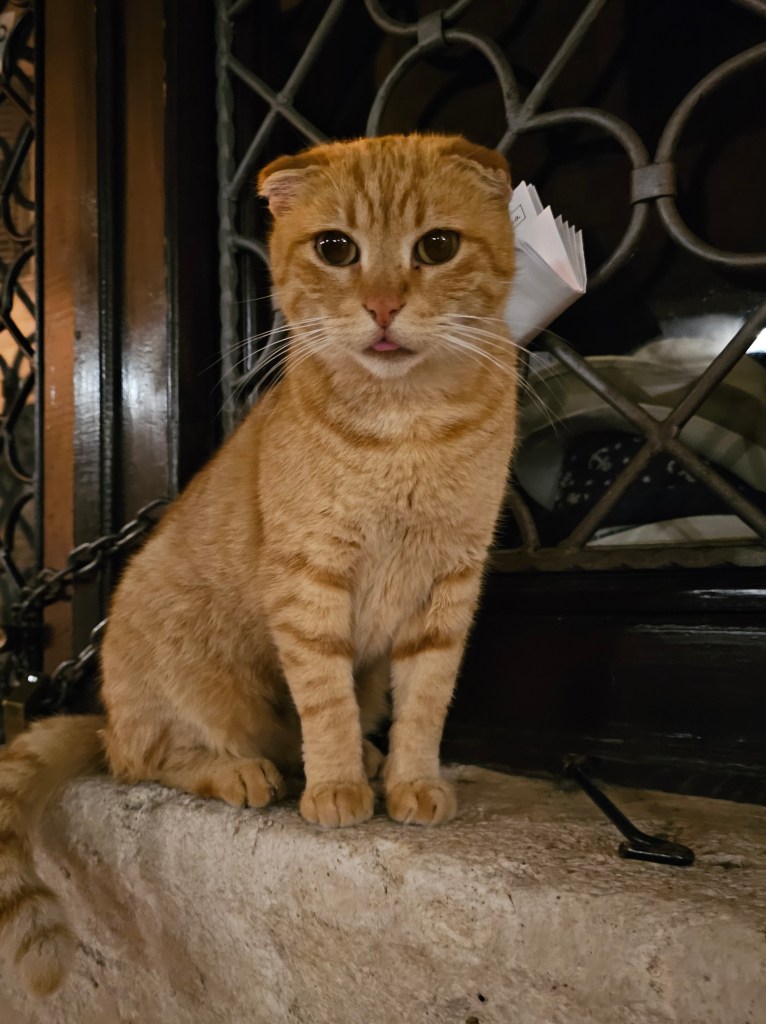
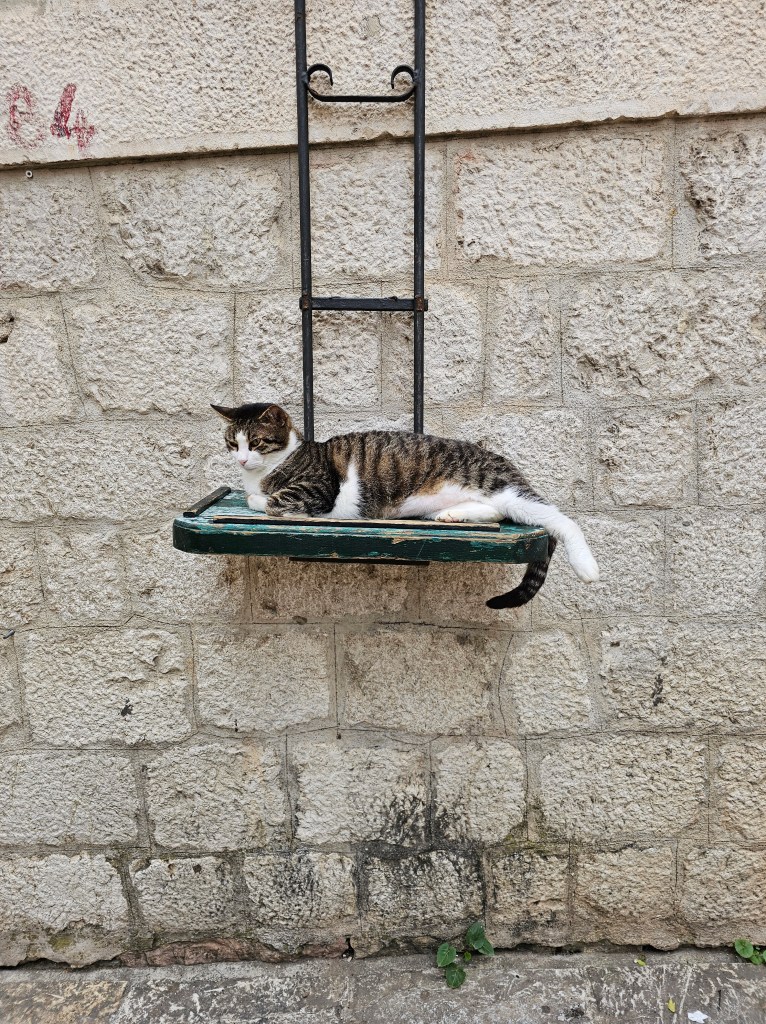
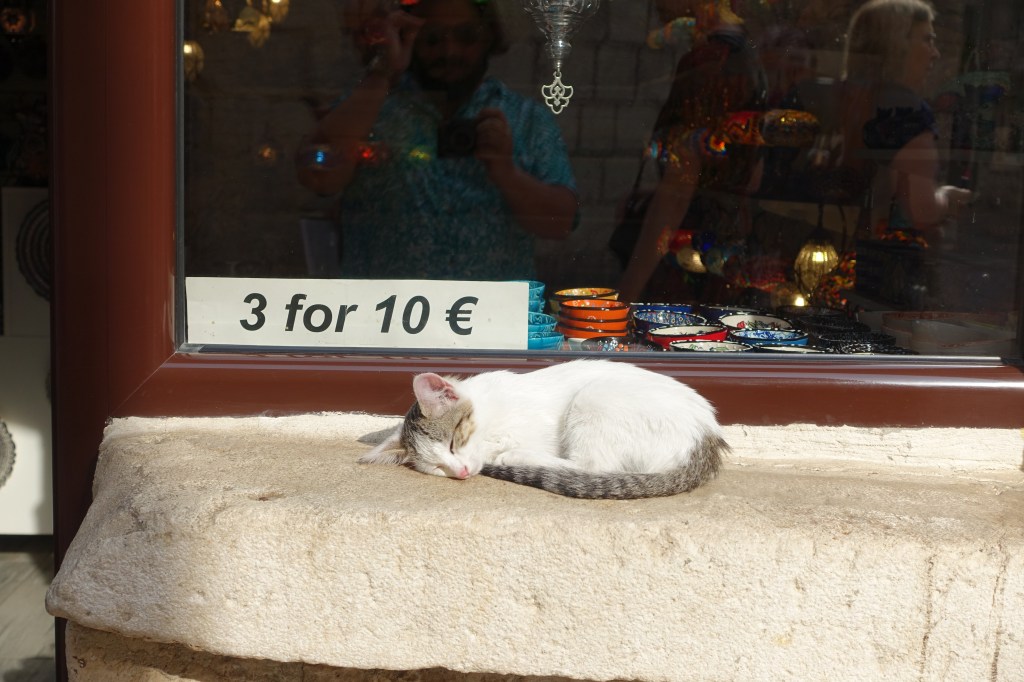
Kotor, Montenegro, a world frozen in time is ripe for exploration and explore we did on our recent jaunt through the Balkans. Nestled amidst majestic fjord-like bay waters, this enchanting coastal town whispers tales of centuries past through its ancient walls and labyrinthine streets. With each step, we were transported through the annals of history, tracing the footsteps of Venetian merchants, Ottoman conquerors, and proud Montenegrin seafarers. As we indulged our senses in the tantalizing aromas of freshly baked pastries and sizzling seafood, we discovered that Kotor’s culinary offerings were as diverse and vibrant as its cultural heritage. Amidst this captivating tapestry, a unique population of feline companions added a touch of whimsy to our journey, gracefully weaving their way through the sun-drenched squares and alleyways (while accepting ALL the pats).
Wall-to-Wall History
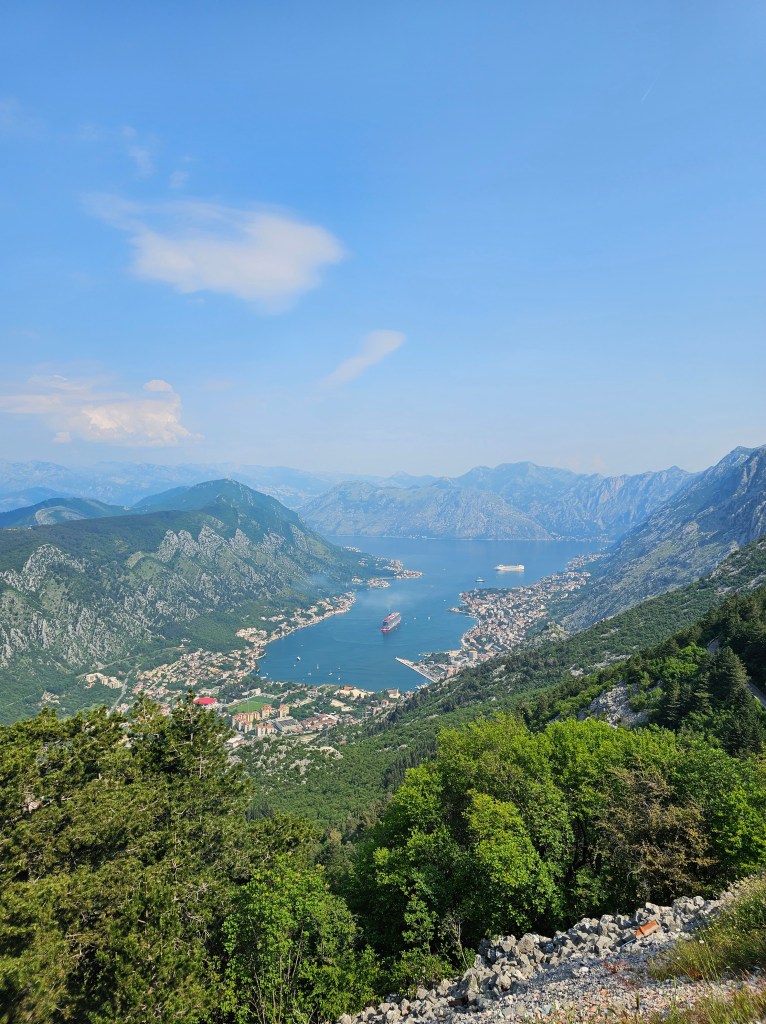
Within the stunning Bay of Kotor, this ancient city has a captivating history that spans over two millennia. From its humble beginnings as an Illyrian settlement in the 3rd century BC, Kotor evolved into a prosperous Roman port known as Acruvium. With the fall of the Roman Empire, the city endured Byzantine and Slavic rule before becoming a Venetian stronghold in the 12th century. The Venetians left their mark on Kotor with impressive fortifications, palaces, and churches. In the 19th century, the city briefly saw French occupation under Napoleon before coming under Austrian rule. Today, as part of independent Montenegro, Kotor’s cobbled streets, medieval architecture, and UNESCO-listed Old Town invite travelers (like us!) to explore its fascinating past while marveling at its breathtaking coastal landscapes.

The Sites (and sights)
As we stepped into the time-honored embrace of Kotor’s walled city, we were transported to a world of medieval charm and captivating history. The cobbled streets beckoned us to discover the hidden gems that lay within. Our journey began at St. Tryphon’s Cathedral, originally built in the Romanesque style, it underwent several renovations and additions over the centuries, reflecting influences from various architectural periods, including Gothic and Baroque.

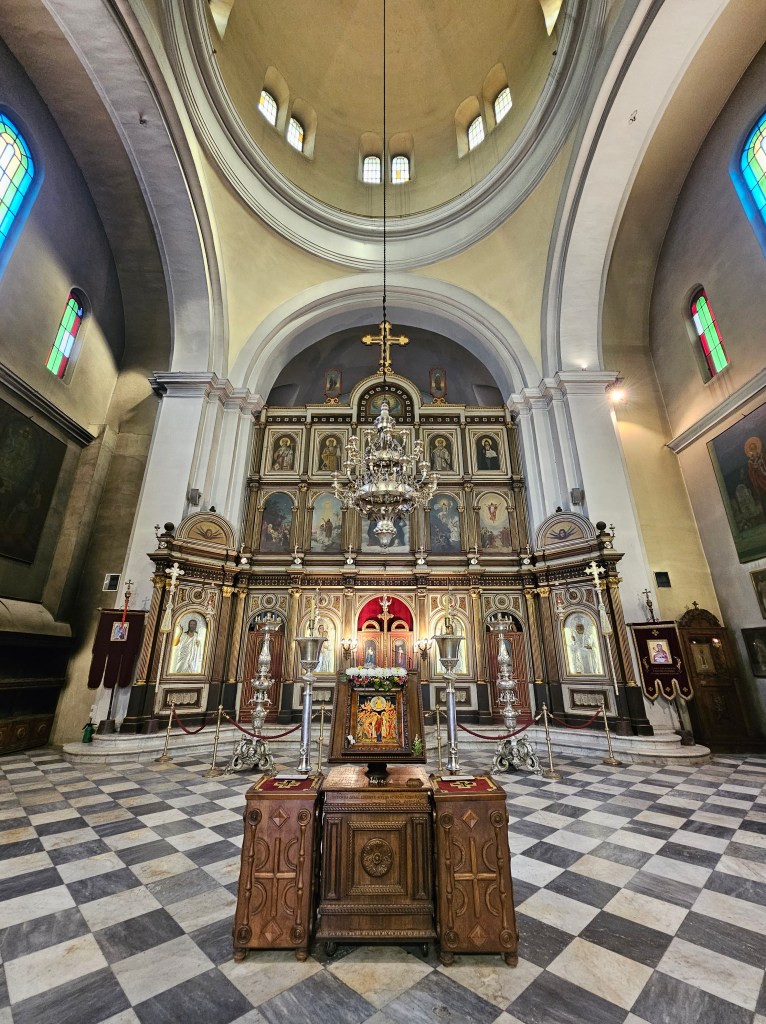
Kotor is a city rich in religious diversity, boasting a captivating array of churches that bear witness to its complex history. The city’s religious heritage includes both Orthodox and Catholic traditions, with churches like St. Tryphon’s Cathedral (above) representing the Roman Catholic faith, while the Church of St. Nicholas (below) showcases the Eastern Orthodox influence. Additionally, Kotor’s history also saw the presence of a significant Muslim community, evident in the remnants of mosques like the Gazi-Casim Pasha Mosque, underscoring the city’s fascinating tapestry of faiths.
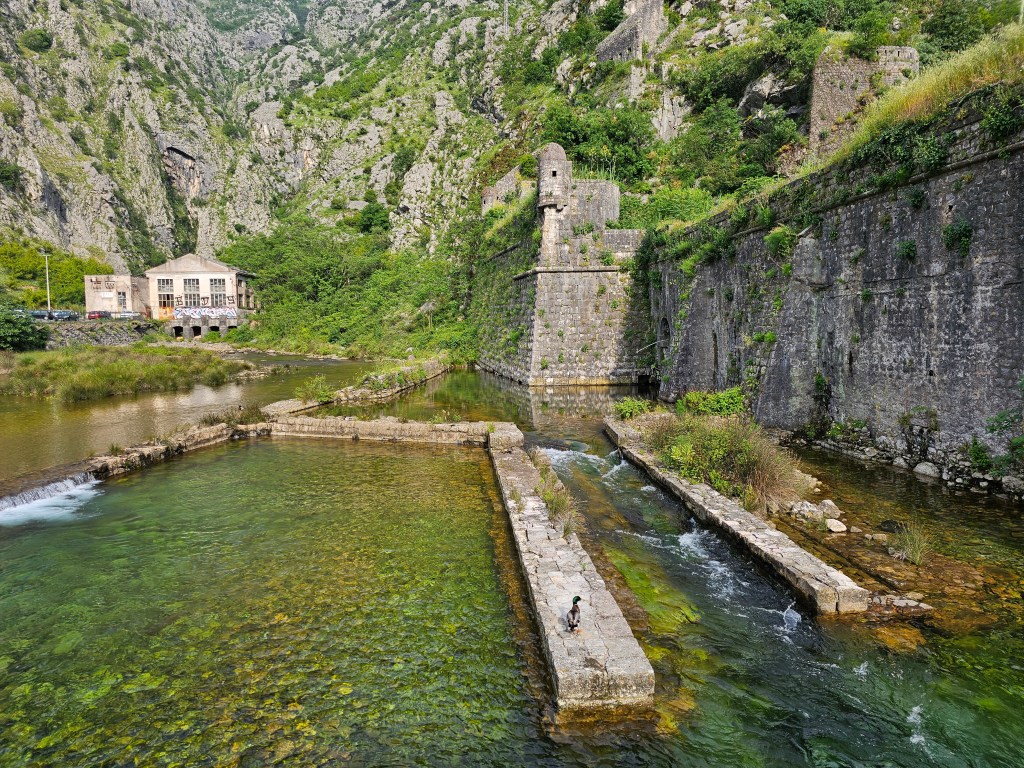
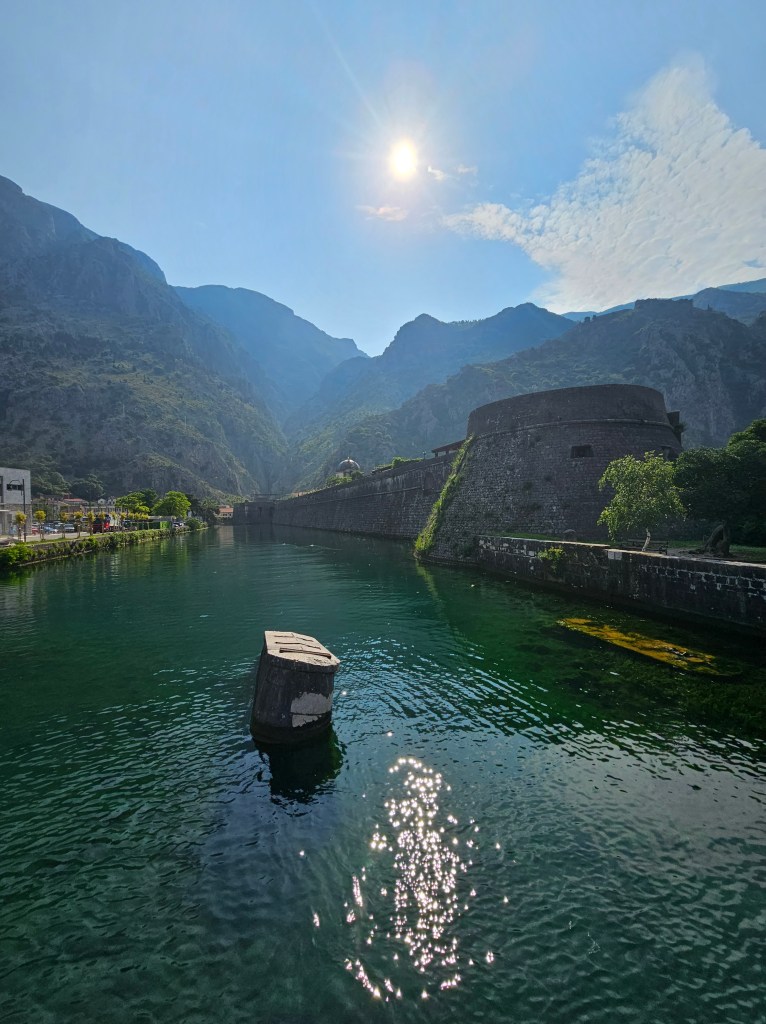
Kotor’s ancient walls stand as a testament to the city’s rich history and strategic significance. Dating back to the 9th century, these fortifications have withstood centuries of conquests and invasions. The North Gate, also known as the River Gate, served as a vital entrance, connecting Kotor to the surrounding land and river routes. As we ventured through the cobbled streets, the Kampana Tower loomed majestically above, offering panoramic views of the city and its breathtaking bay. Our journey eventually led us to the Sea Gate, the main entrance facing the Adriatic Sea, where countless sailors and traders once arrived with their wares. The imposing Gurdić Gate, an architectural marvel, guarded the western entrance, while the Gurdić Bastion stood as a defensive stronghold, preserving the city’s safety from external threats. Ever-present, there is an impressive fortress crowning the mountain above the city, a symbol of Kotor’s resilience and a reminder of the city’s storied past. You can climb up a path of steep, uneven stairs (SO MANY) to reach the fortress, it is 2km up and back.

The heart of the city seems to be Trg od Oružja, or Arms Square. The bustling square was alive with energy, inviting us to explore more. The name name is a remnant from Venetian times, when munitions were made and stored here.

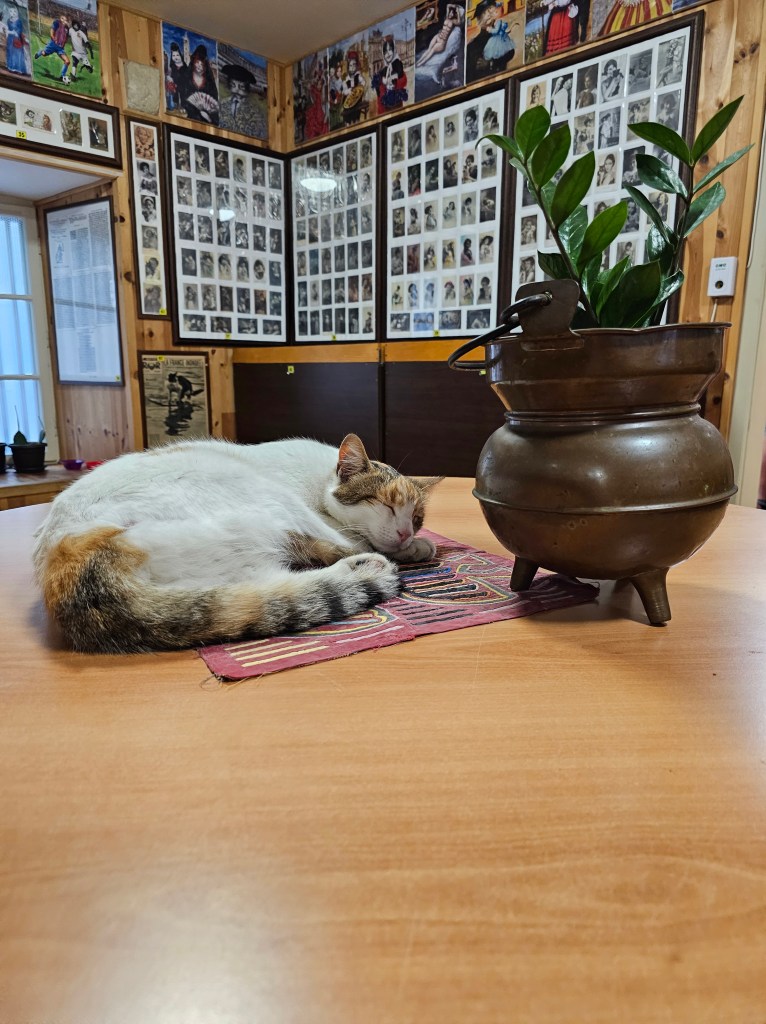
When researching things to do in Kotor, one thing that I kept see pop up in the “quirky” category was the Cats Museum. This unique gem shared heartwarming stories of the city’s love for cats and their integral role in Kotor’s modern zeitgeist. The abundance of cats in Kotor is due to a long-standing tradition and cultural affection towards these furry angels. Cats have been a part of Kotor’s history for centuries, as they were introduced to control the population of rats and mice on ships and in the city’s warehouses. Over time, the locals developed a fondness for the cats, considering them a symbol of good luck and protection. As a result, cats have been cherished and cared for by the community, leading to their proliferation throughout the city, and ultimately, the Cats Museum. Entry to the Cats Museum is 1 euro and the museum displays a collection of cat-related exhibits, including artifacts, artwork, and memorabilia, celebrating the city’s love and admiration for its feline residents.


Let’s Eat!
Montenegrin cuisine reflects the country’s diverse history and geography, blending Mediterranean and Balkan flavors. A staple in Montenegrin meals is the famous Njeguški pršut, a smoked and dried ham made from locally raised pigs. Another popular dish is Ćevapi, small grilled sausages typically served with flatbread, onions, and a side of kajmak, a creamy dairy spread. Montenegrins also cherish hearty stews like Gulaš and Pasulj, often cooked with a variety of meats and vegetables. To complement their meals, locals enjoy the national drink, Rakija, a strong fruit brandy made from plums, grapes, or other fruits. Montenegrin cuisine’s rich flavors and hearty dishes make dining in this country a delight for food enthusiasts.

Our first night in Kotor, we stumbled upon Restobar Taraca, a hidden gem located alongside the serene river, just outside the city walls. The good Google reviews and casual atmosphere instantly drew us in. The combination of the tranquil setting (with ducks putting on a show in the river for us), friendly staff, and both Montenegrin and foreign food options, made Taraca a great place to dine. Shout out the to very interesting but delicious nachos we ordered on a whim– cucumber on nachos was a first for us.

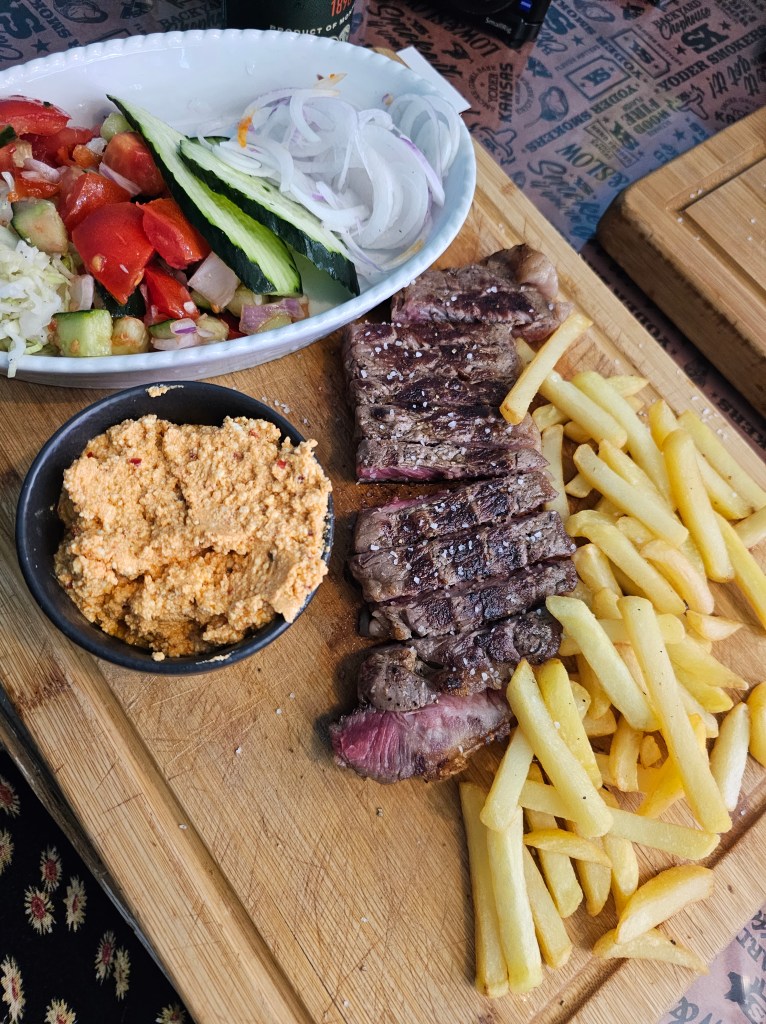
One night, after a few drinks at Nitrox, our server asked us where we were planning on having dinner. We told him that we didn’t know yet but that we were open to suggestions. Without hesitation he said, “BBQ Tanjga.” He gave us directions and we were on our way. Located outside the city walls, BBQ Tanjga offers a wide array of grilled meats, seafood, and traditional Montenegrin specialties. There was a pretty substantial line when we arrived, with a crowd waiting to order along a class encloused meat display. It was an interesting set up, as you ordered your meat, it was fired and then sides added– almost like a Chipotle-esque assembly line but with delicious, cooked to order meat. We ordered steaks and found a table to wait at as our order would take a little longer. As we were waiting, nearly every local that we interacted with that day came through the door. There were hawkers from the bazaar who stopped to say hello and to tell us that we found the best place, the desk manager from our hotel walked by, and the staff from Nitrox even popped in to grab a to-go order– Tanjga was defintely the spot in Kotor. The food was unbelievable, worth the wait, and something that I still think about almost daily.
Živjeli!
Rakija holds a special place in Montenegro’s culture and is a beloved traditional drink across the Balkans. This potent fruit brandy is typically made through a process of distillation, using various fruits like plums, grapes, apricots, or even herbs. It is known for its high alcohol content, which can range from 40% to 60% or more. Montenegrins take pride in producing homemade Rakija, often using family recipes passed down through generations. This cherished beverage is commonly served during social gatherings, celebrations, and as a symbol of hospitality, making it an integral part of Montenegro’s culinary heritage.

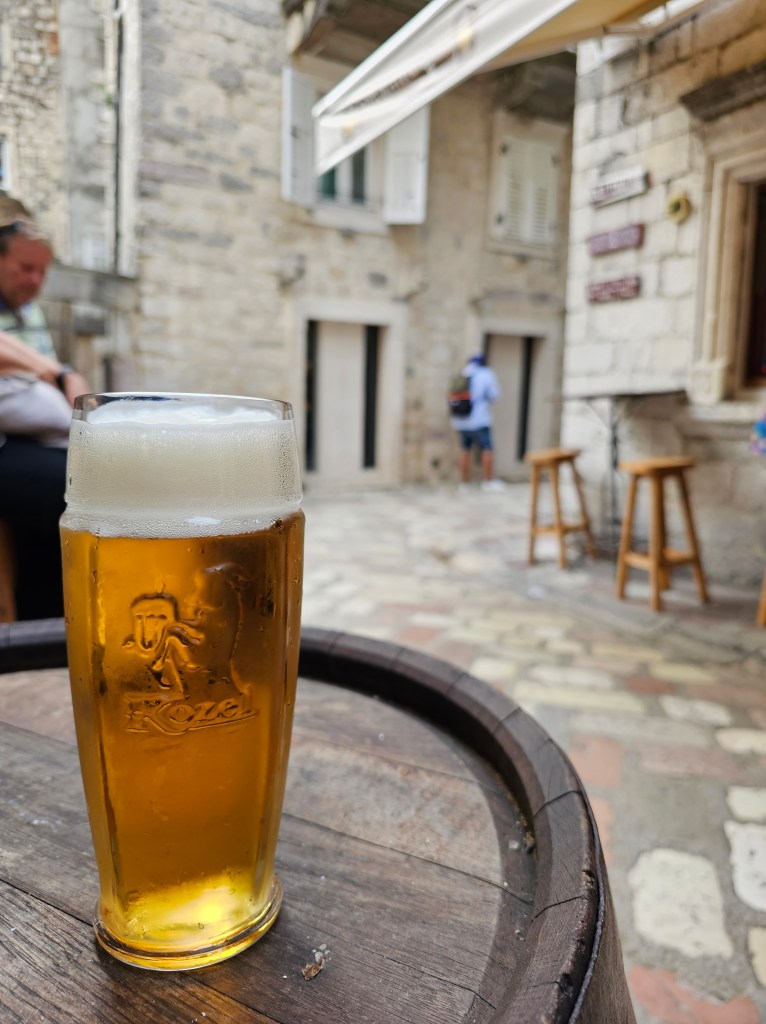
The history of beer in Montenegro is relatively young compared to other alcoholic beverages like wine and Rakija. Brewing beer gained popularity in the region during the late 19th and early 20th centuries, with the introduction of commercial breweries. However, the industry faced challenges during the turbulent periods of the 20th century, including the World Wars and the breakup of Yugoslavia. Thankfully, it is not hard to find a good beer in Kotor– we spent quite a bit of time cooling off in the maze-like streets with a cold beer.
In recent years, there has been a significant resurgence in the craft beer scene in Montenegro. Microbreweries and craft beer bars have been popping up across the country, offering a wide range of unique and flavorful beers to locals and tourists alike. This craft beer movement has brought a sense of excitement and experimentation to the Montenegrin beer scene, with brewers incorporating local ingredients and cultural influences into their creations. As a result, beer enthusiasts (that’s us!) can now enjoy a diverse selection of craft brews, making the beer culture in Montenegro more vibrant and dynamic than ever before.

In our quest to uncover the hidden beer gems in every city that we visit, we found The Nitrox Pub. I had pinned the pub on my map before getting to Kotor as a place to check out. While heading to the Gurdić Gate on an initial walking tour through town, I noticed a bar that was playing interesting music and had a nice setup of tables outside. I made a mental note to come check it out later, without looking at the name. Lo and behold, the unnamed cool bar that I noticed was Nitrox, the pub I had saved before the trip– that’s past Ami looking out for future Ami and David. The pub describes itself as a “diving and rock pub” and was founded by two divers. There are nods to diving all over the inside of the building and logo is of an old-timey diver. Nitrox has an amazing selection of Balkan craft beer, one of the best that I saw on our three week trip in the Balkans. They also have a selection of beers that they brew themselves. The beer was great, the service on point, and the atmosphere welcoming– you couldn’t ask for more from a place.

The Basics
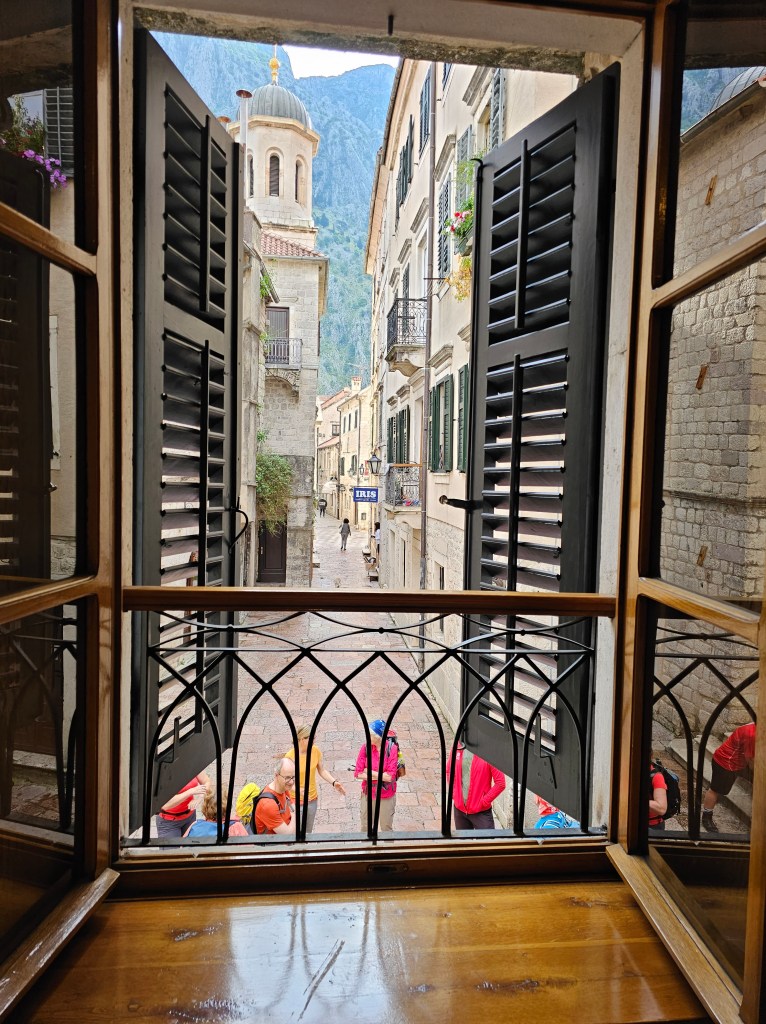
While there are a lot of hotels and BnBs to stay in outside of the walls, there is nothing like staying within the maze of alleys inside the walls of Kotor. On this trip we stayed at Hotel Marija, which offers comfortable rooms at affordable prices, along with amenities like free Wi-Fi and a cozy on-site restaurant serving local delicacies. Our room had a street view, which was perfect for people watching or admiring the quiet street after the cruise ships have left for the day.
Getting to Kotor can seem daunting, especially for those who are more used to traveling in Western Europe. The unique and beautiful landscape of the area means that there is no train connection from other cities. For those who prefer the flexibility of driving, Kotor is accessible via well-connected roads from various neighboring countries, allowing visitors to enjoy scenic road trips. Alternatively, flying directly to Tivat Airport provides a convenient option, with the airport being only a short drive away from Kotor. Another exciting choice is to fly to Dubrovnik Airport in Croatia and then take a picturesque drive along the Adriatic coastline to reach Kotor. Lastly, for a unique arrival, travelers can opt for a cruise, relishing the stunning views of the Bay of Kotor as they sail into the city’s historic port. From talking with locals, the cruises are a blessing and a curse for the city. For the most part, cruisers typically enter a city on a shore excursion and do little for the local economy aside from buying a souvenir or two. We drove to Kotor from the Konavle region of Croatia– the drive was gorgeous and we even got to enjoy a brief car ferry ride across the Bay of Kotor.

Montenegro’s official language is Montenegrin, which is part of the South Slavic language group. However, due to historical ties and regional interactions, Serbian, Bosnian, Albanian, and Croatian are also widely spoken. The official currency of Montenegro is the Euro (EUR), which simplifies transactions for travelers coming from Eurozone countries. For many visitors, entering Montenegro is relatively easy, as the country offers visa-free access to numerous nationalities for short stays. Citizens of the European Union, the United States, Canada, Australia, and several other countries can enter Montenegro visa-free for up to 90 days within a six-month period, making it an accessible and welcoming destination for international travelers.


Puur-adise
Kotor was a joy for the senses– where else can you challenge yourself to pet 20 cats on your way home from the pub and succeed?! Visiting is an unforgettable experience, history, natural beauty, and warm hospitality all converge, creating memories that will stay with us fur-ever (last cat reference, I promise).



 Beer Travelers