

With travel resuming, I can’t help but think of far-flung destinations. Near the center of Cambodia, not far from the banks of the Tonlé Sap lake, Siem Reap fits the bill for an exotic getaway. Visitors to Siem Reap are more than likely to be coming for one reason: the astonishing Angkor Complex but there is more to the area outside of the stunning ruins and your stomach and mind will be grateful for the wander.
Townies

We wanted a few things from our hotel in Siem Reap: easy access to the sites, air conditioning, and a pool. The Dinata Angkor Boutique Hotel met all the requirements and also provided a comfortable stay, with a friendly staff, and a filling breakfast for those long days spent hiking the ruins (or the mornings spent recovering from a night on Pub Street). The hotel is a 15 minute walk from anywhere in town and a 15 minute drive to the Angkor Wat.

Our first night in town, after a very bumpy ride from Battambang, we did what we do best and searched out some street food at the night markets. Night markets are very popular in Southeast Asian countries and are known for souvenirs ranging from mass-produced t-shirts to artisan handicrafts. These markets are a great way to end a day of sightseeing and enjoy a stroll without the heat of the day weighing you down. In the markets you’ll often find an area where several food hawkers are set up, a sort of makeshift food court. Popular dishes to try here are: Lort cha– wide noodles fried with veggies, beef, egg and a spicy red sauce; Num pang– similar to a banh mi, featuring a baguette with a choice of ham, beef, or pork topped with onions and chives; and Kralan– bamboo sticky rice cooked in the bamboo shoot over an open fire with black beans and coconut milk, it is sweet and savory with a lightly smoky flavor. We went to two night markets during our visit in Siem Reap: The Angkor Night Market and The Art Center Night Market. Both markets are centrally located and feature hawkers, handicrafts by local communities and NGOs (non- governmental organizations).

With so much delicious street food, we didn’t find ourselves in restaurants often. With that in mind, we did have a very memorable and delicious meal at Khmer Taste on Sok San Road. The menu is large and can please even the pickiest of eaters in your party. We went with two classic Cambodian dishes, Fish Amok and Lok Lak. The restaurant has draft beer, wine, and cocktails and is very reasonably priced.

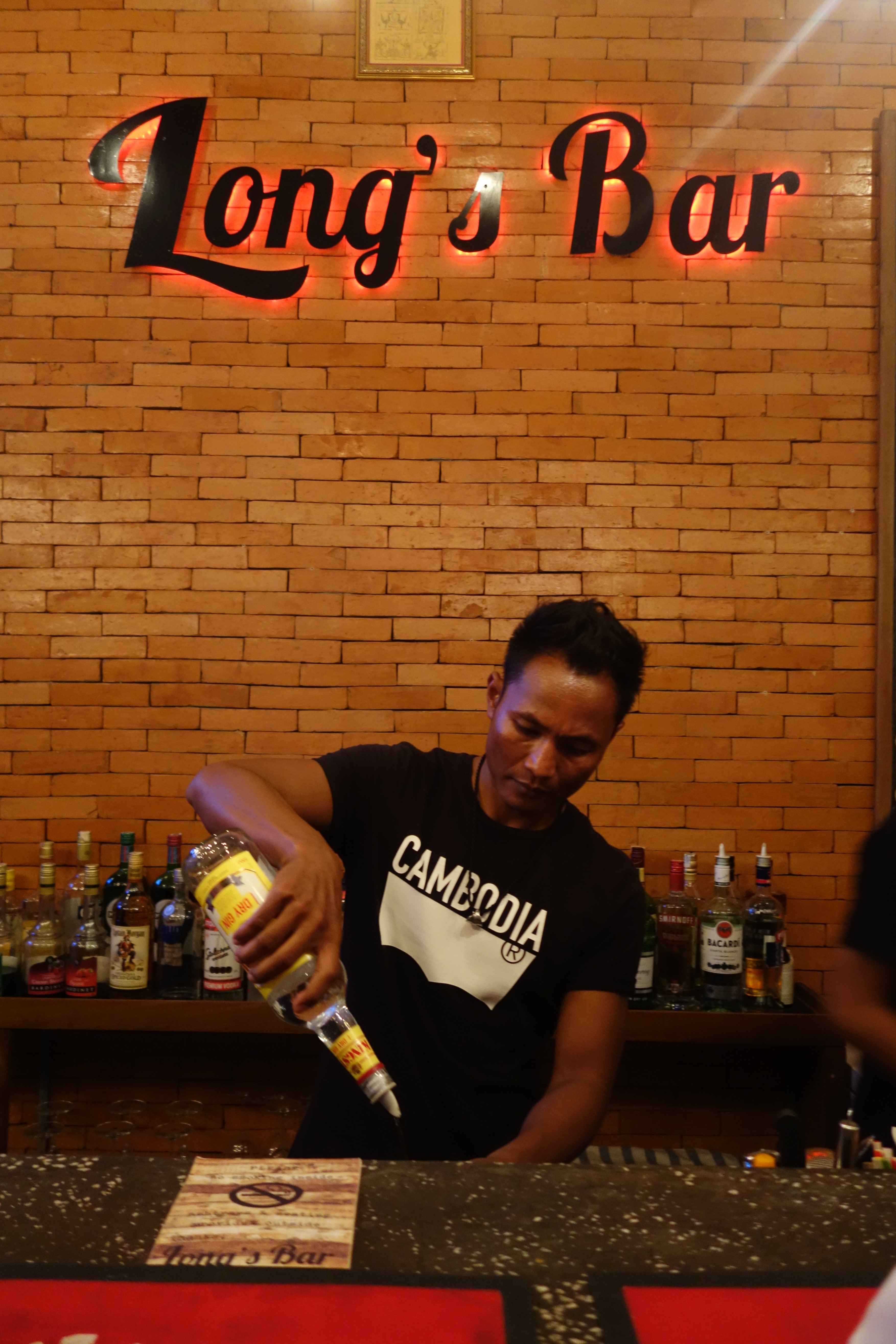
One of the best places in town to relax after an action-packed day in Siem Reap is Long’s Bar. Down a narrow alley, not far from Pub Street, Long’s Bar is calm and welcoming– with cold AC and no smoking, which are amenities a little difficult to find in this part of the world. The happy hour here can’t be beat, with ¢.75 draft beer and $2.50 cocktails from 5-7pm. Long is a great host, a wonderful tour guide, and one of the many reasons we’ll be visiting Cambodia again in the future.
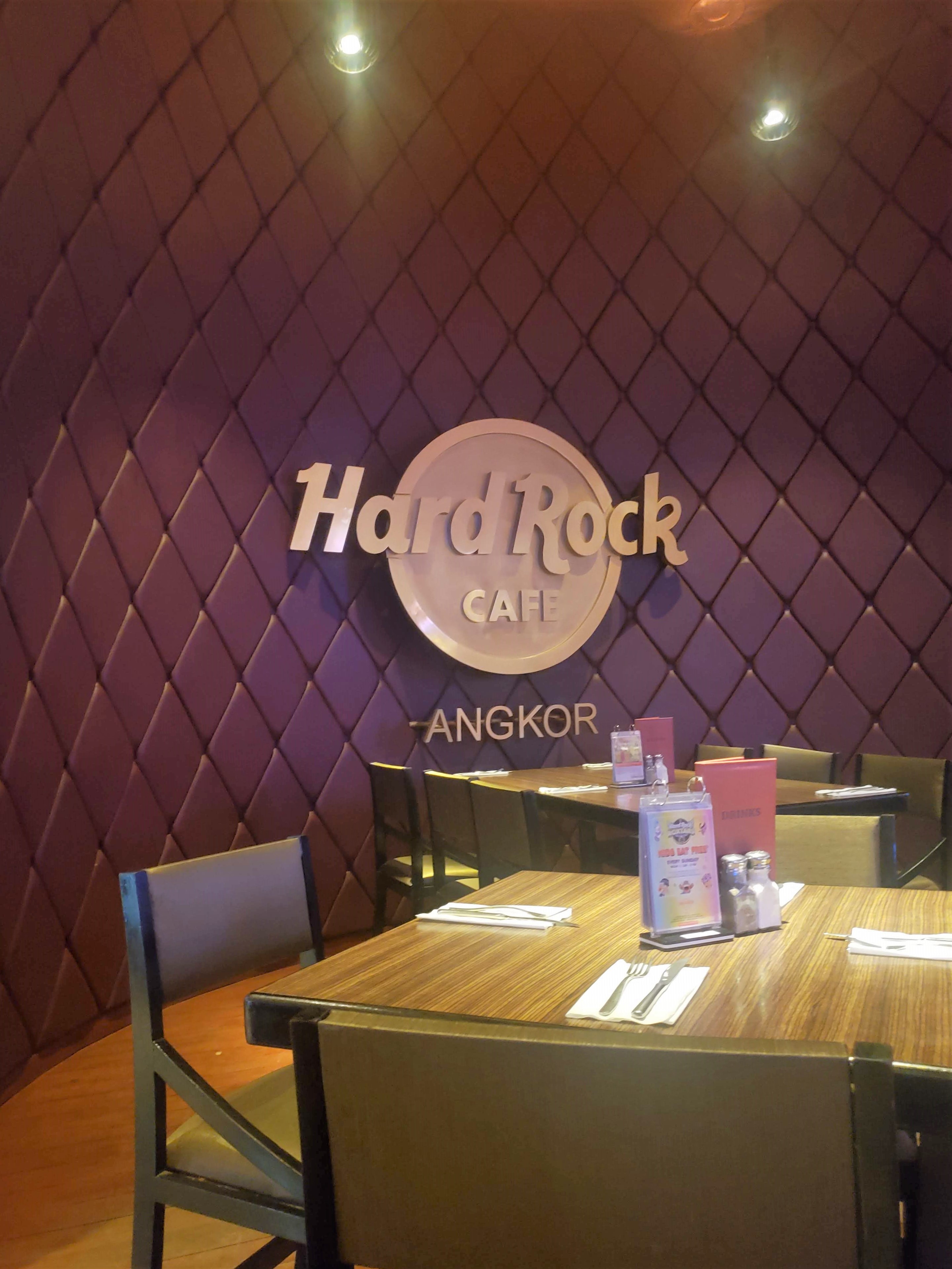
On a side note, we do have a shameful travel indulgence: The Hard Rock Cafe. It’s not a place that we make a point to go every time that we visit a location with one but it is a bizarre comfort. On a group trip through Eastern Europe in college, I came down with what we dubbed the “Contiki Cough” and could not shake it. After a few days suffering in the bitter cold of March in Prague, we saw a neon sign that beckoned us with it’s warm glow. There were burgers, milkshakes, and a familiar bathroom situation– it was comforting and I swear my fever broke with the first bite into a mozzarella stick. Since that trip, we have referred to The Hard Rock Cafe as the “American Embassy.” Whenever a trip starts to wear down your spirit a bit, there’s always a basket of chicken tenders waiting to pick you back up.
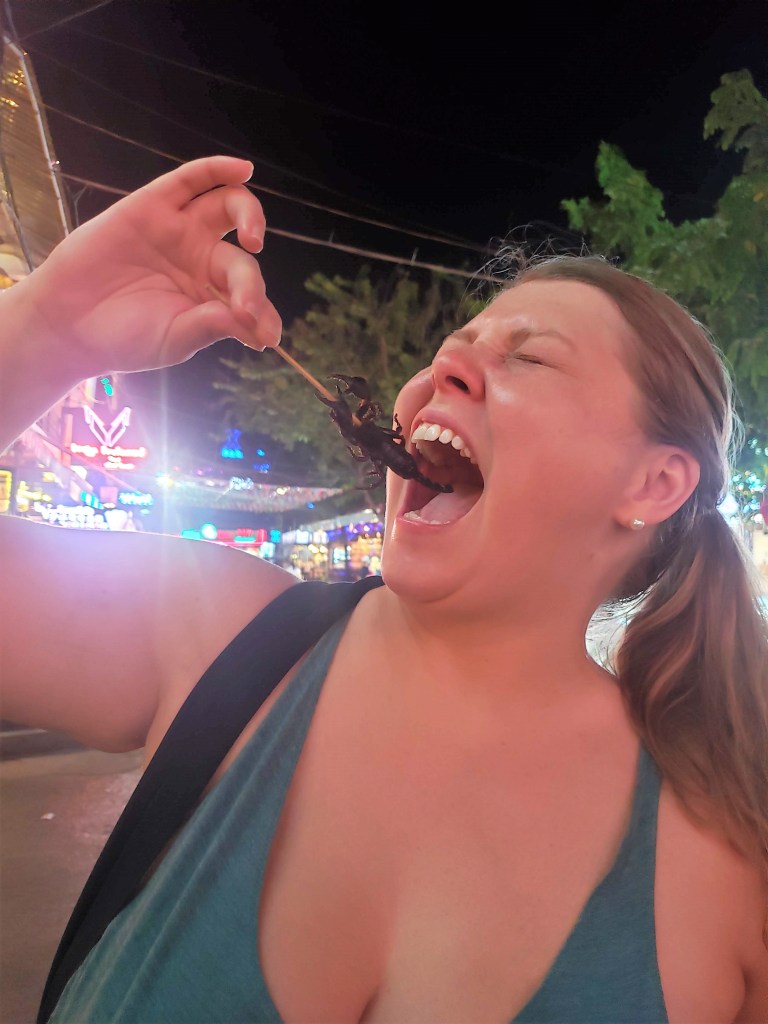
One thing you’ll come across after a night out in Siem Reap, are the insect vendors. Yes, you read that correctly: insect vendors. You’ll see locals out grabbing cooked crickets on a stick and you’ll see tourists braving it and going for the tarantula. This wasn’t my favorite “strange” food of the trip (that actually might be the roadside rat we ate on the way from Battambang) but it was an adventure and that’s what we’re here for, after all.
Angkor Complex
One of the first conversations that David and I ever had was about our shared desire to one day visit the Angkor Wat. At the time, I’m not sure if he could find Cambodia on a map but it’s a place his Dad, an avid absorber of all things historical, had talked with him about and it stoked his wanderlust fire. I grew up in the pages of books, launching me to far-away places. I waited on bated breath each month for a new National Geographic magazine, while pouring over old issues scavenged from Haslam’s. Every now and then, splashed in the ink of those books and magazines, I’d be transported to a jungle temple– The Angkor Wat. Of course, neither of us were prepared for how extensive and marvelous the Angkor Complex is in person.

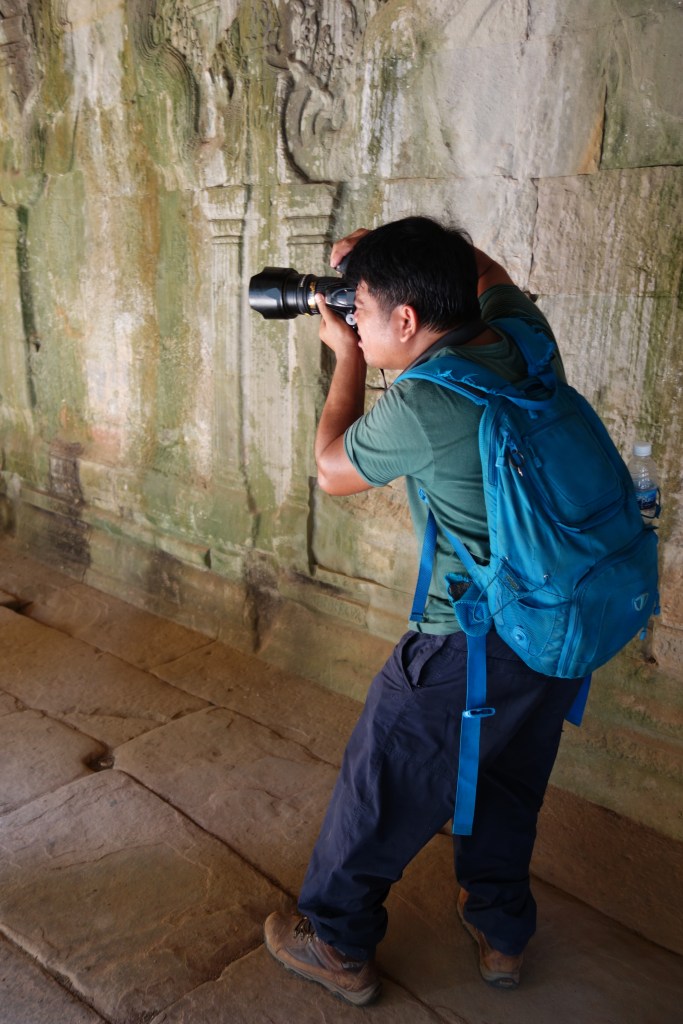
We explored the temple complex over two days, once with a group guided by Johny and the next day with a private photographer– Kimleng Sang. The admission to the temple complex is $37 for a one day pass or $67 for a three day pass and includes all the associated temples and sites, there are well over a dozen (of the former 1000) that you are able to visit. The tours we took visited different temples and were both very informational. Johny was full of knowledge and loved showing off the best angles for cellphone cameras and selfies. We hired Kimleng for a guided photography tour of several other temples, as well as sunrise at the Angkor Wat. He is an amazingly talented photographer and an all around good person (check out his community charity efforts during the pandemic lockdown). I highly advise anyone going to Siem Reap to hire him as a personal guide and photographer– he will not only teach you how to be a better photographer, he will also use his skills to snap photos of you in one of the most beautiful places in the world.

Angkor Wat
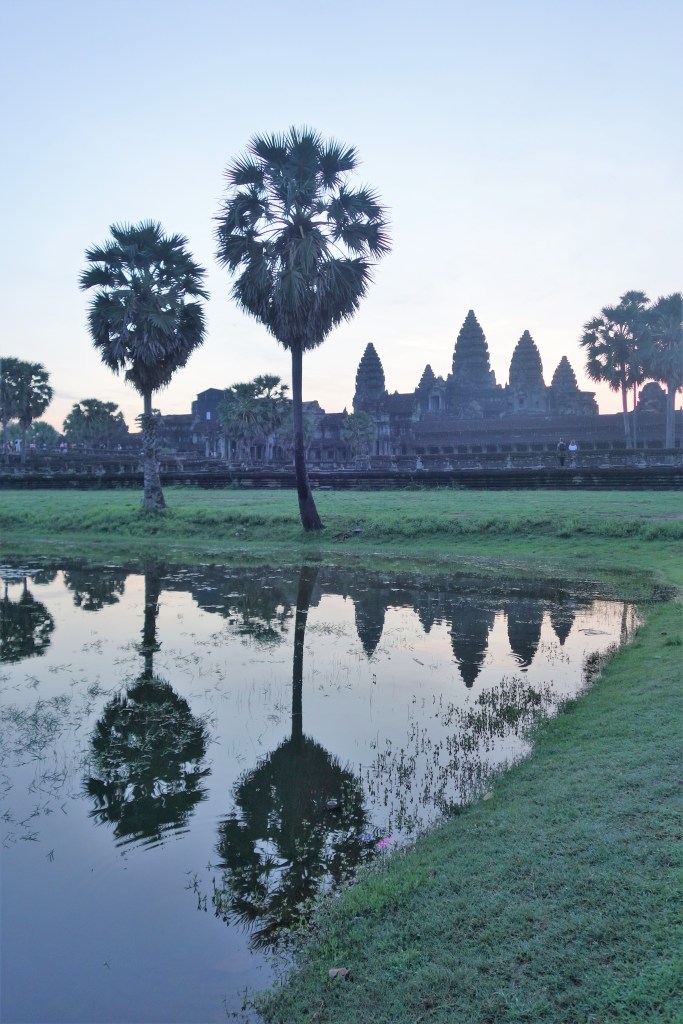
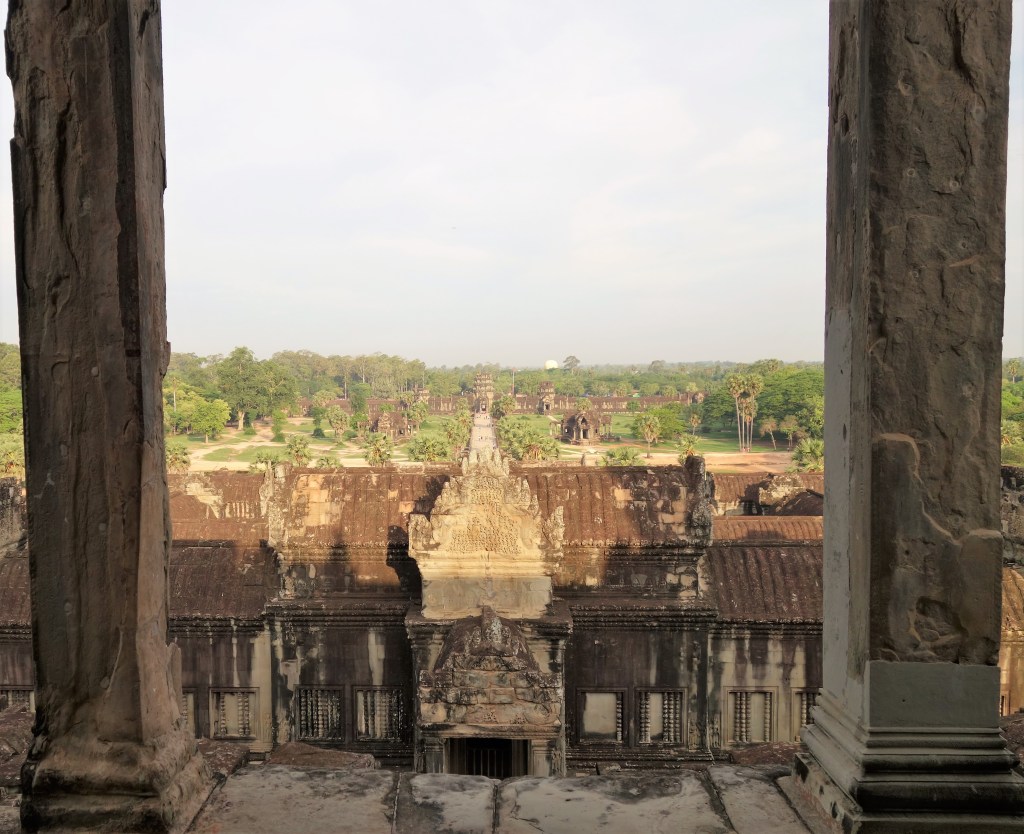
The largest and most iconic of the temples in the Angkor complex is the Angkor Wat. The five lotus bud shaped towers are the image most associated with Cambodia– the outline is even on the national flag. This is the archeological site that people come from all over the world to see. The temple is surrounded by a moat and was never truly abandoned, so the jungle did not encroach upon it like some of the other temples in the complex. Although a Buddhist monument now, the temple was originally built in the early 12th century with religious iconography honoring the Hindu Gods. Not long after it’s construction, the temple was taken by the Chams people and slowly converted to a Buddhist temple. Throughout the site, you can spot remnants of the original Hindu motifs as well as intricate Buddhist decoration. The temple is huge and needs at the very least two hours to explore.


Bayon

I found myself fluctuating between a serene peace and a hyper-sense of being watched while walking through Bayon. The 54 gothic towers, with stone faces on all sides, thrust skyward from the upper terrace. The faces are placed at different heights and angles, so that at any moment you are in view of at least a dozen smiling likenesses of King Jayavarman VII.
Ta Prohm

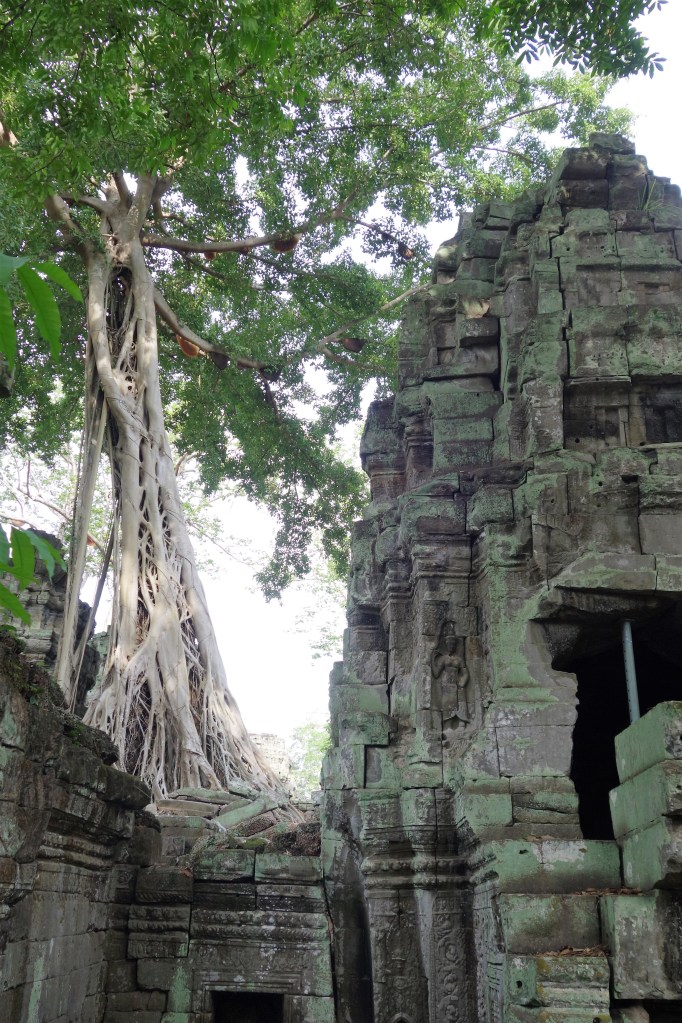
One of the most famous temples in the complex is Ta Prohm, or as most people refer to it “The Tomb Raider temple.” Unlike the Angkor Wat, this temple was not protected by a moat and the jungle slowly began to reclaim it. The result is beautiful for photos but dangerous for the structure. The trees and vines climbing over the temples and halls cast an eerie greenish-blue hue and provide a nice respite from the heat of the day.
Banteay Srei

Banteay Srei is considered the art gallery of the Angkor complex, with some of the most intricate stone carvings ever seen. The modern name translates to “citadel of women” but it was originally dedicated to the Hindu God Shiva. Nearly every inch of the pink sandstone edifice is covered in fine carvings depicting mythological scenes or scripted stories.
Angkor Thom
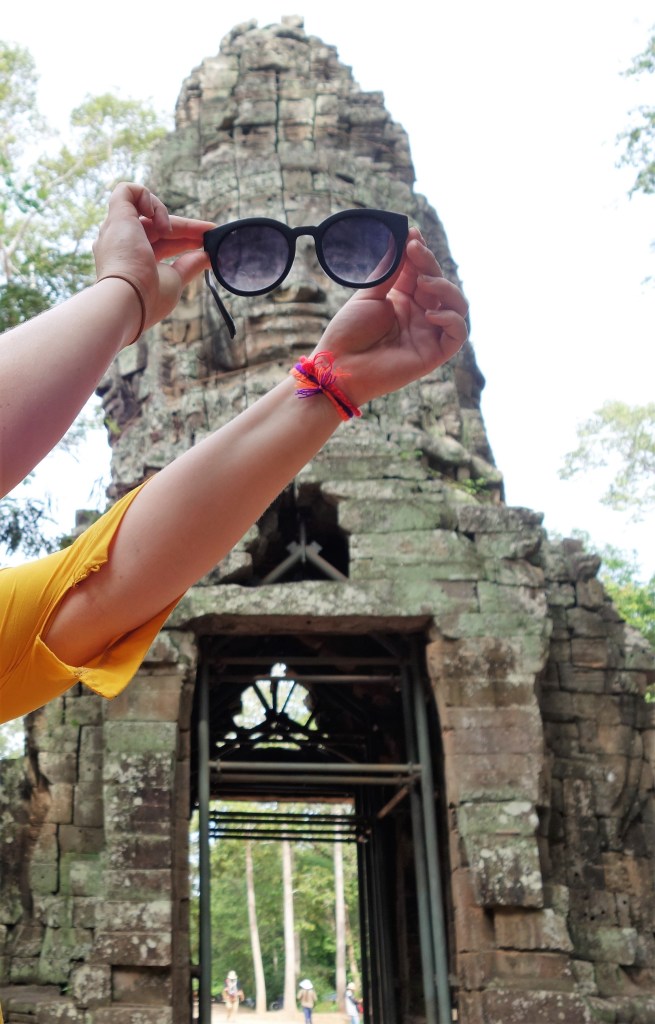
Angkor Thom was the last great Khmer capital and very well could have supported one million people at it’s height. The complex 10 square kilometers and forteified by walls 8 meters high. There are five gates into the Angkor Thom, one facing each cardinal direction and one extra facing the east, know as the Victory Gate.
Yes, There is Craft Beer in Cambodia

Don’t fret, we’re not coming this far without looking for some local beer. You can find The Local Brew Pub about a 15 minute walk from the center of Siem Reap. The place is run by an expat and brews a few of their own beers, we tried an IPA and an Amber and both were solid. The pub also offers other craft beers, as well as wine and cocktails. The menu was simple bar food but what more can you want with a beer than a burger? Bonus, they have a bar cat!
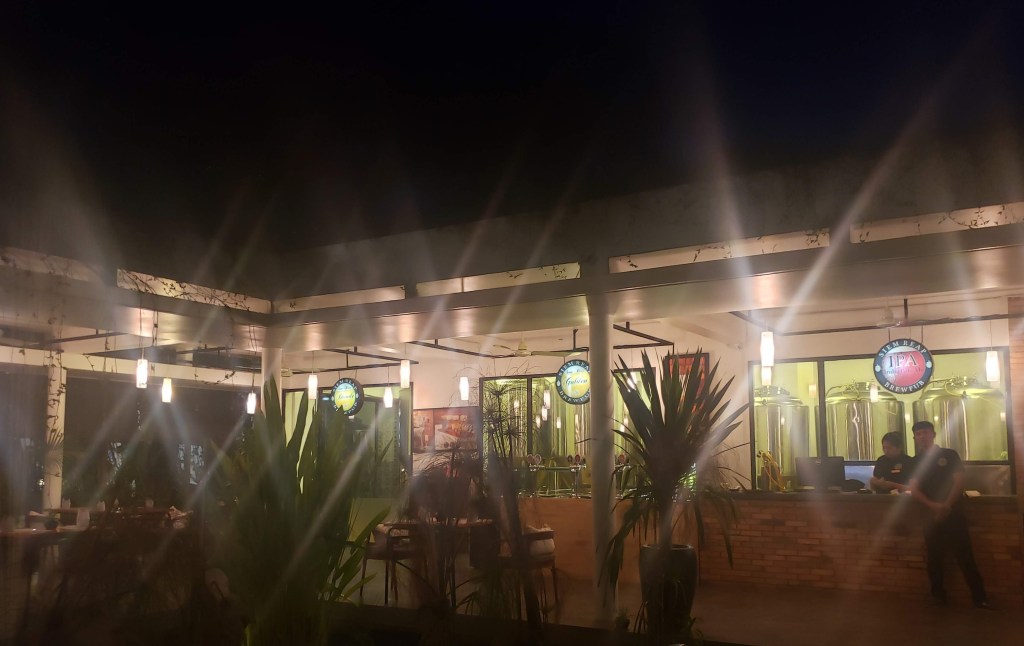
Siem Reap Brewpub is very close to the center of town and is a little more of an upscale option for a meal than The Local Brew Pub. The beer here was a little more pedestrian but the menu options were well thought out and there were even suggested beer and food pairings! The atmosphere was very relaxing and the décor well thought out. This also seemed to be a much larger scale producer of beer than The Local and the space was designed to handle the volume of tourists that comes from being closer to town.

The Nitty-Gritty
Let’s be honest: you aren’t going to end up in Siem Reap, or Cambodia in general, on a whim– it takes some work to visit but it is worth the planning and travel hours. Some important things to keep in mind while planning your trip:
- Cambodia uses the US Dollar as their main currency (the Cambodian Riel is becoming more widely used with an exchange rate of ~4000/$1), ATMs are readily available in larger cities, and haggling in markets is expected
- US visitors need a visa to enter Cambodia, fully vaccinated travelers do not need to quarantine
- It’s hot and there are insects: drink plenty of bottled/filtered water and pack sunscreen and insect repellant
- Khmer is the main language spoken in Cambodia and learning a few basic words and phrases will greatly increase both your enjoyment and reception
- When eating street meat, make sure that it is cooked in front of you
- Stick to bottled or filtered water and avoid ice in your drinks (when in doubt, drink an Angkor beer)
- Those iconic sunrise photos of the Angkor Wat that you see splashed all over Instagram? Yeah, you’ll need to get there early (4:30am pick-up) to catch the sun and beat the crowds
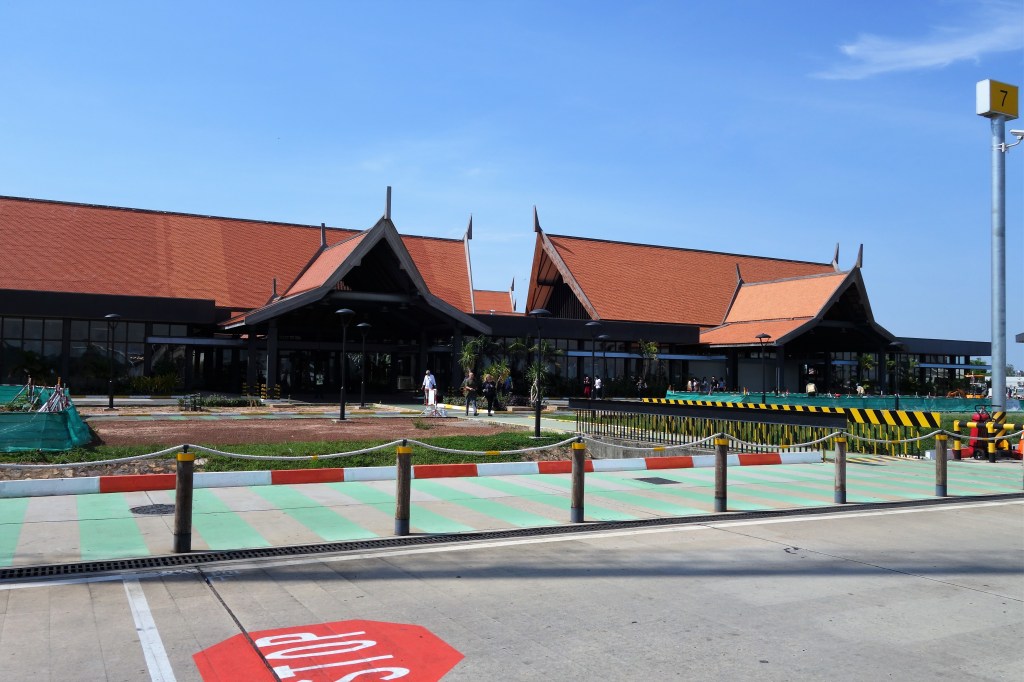
Siem Reap International Airport (REM) is about 20 minutes from hotels in the city center. You can jump straight into the SE Asian vibe and get a tuk-tuk to your hotel for $9 or grab a taxi for $10. The flight to/from Phnom Penh is 50 minutes and the drive can take from 5-8hrs. Bangkok is a popular “next stop” for people visiting Siem Reap– I advise the flight over the drive as the flight is about 1 hour and the drive is a rough 7 hours, plus a border crossing.

 Beer Travelers
You did NOT eat that insect and a rat!? I’d have done the same though all in the name of adventure.
That photo of you and David may be one of my very favorites. I see it and think that is what travel dreams are made of!
LikeLike