
Italy is not the first place to come to mind when one thinks about beer travel.
Emilia-Romagna isn’t the first place to come to mind when one thinks about travel to Italy.
So, how did we end up here?
Well, friends, it all comes down to food.
When researching the best places in the world to eat one constant kept popping up: Bologna. Researching further, the entire region is a foodie dream. So, while this post will include some of the beer content that I tend to lean on, it will focus more on the absolute gastronomic heaven that we experienced in Bologna and the surrounding region of Emilia‐Romagna.
Have You Ever Seen a More Gorgeous ______?
Every dish you come across in this region is pure magic. The region has an incredibly rich gastronomic and wine-making history. Dishes and ingredients that you think of as quintessential “Italian” dishes and ingredients are from here: Parmigiano Reggiano, prosciutto, tortellini, balsamic vinegar, lasagna, mortadella, tagliatelle al ragù (“Bolognese” ), and many more. This is the kind of place where your stomach is constantly full but your eyes are insatiably hungry.

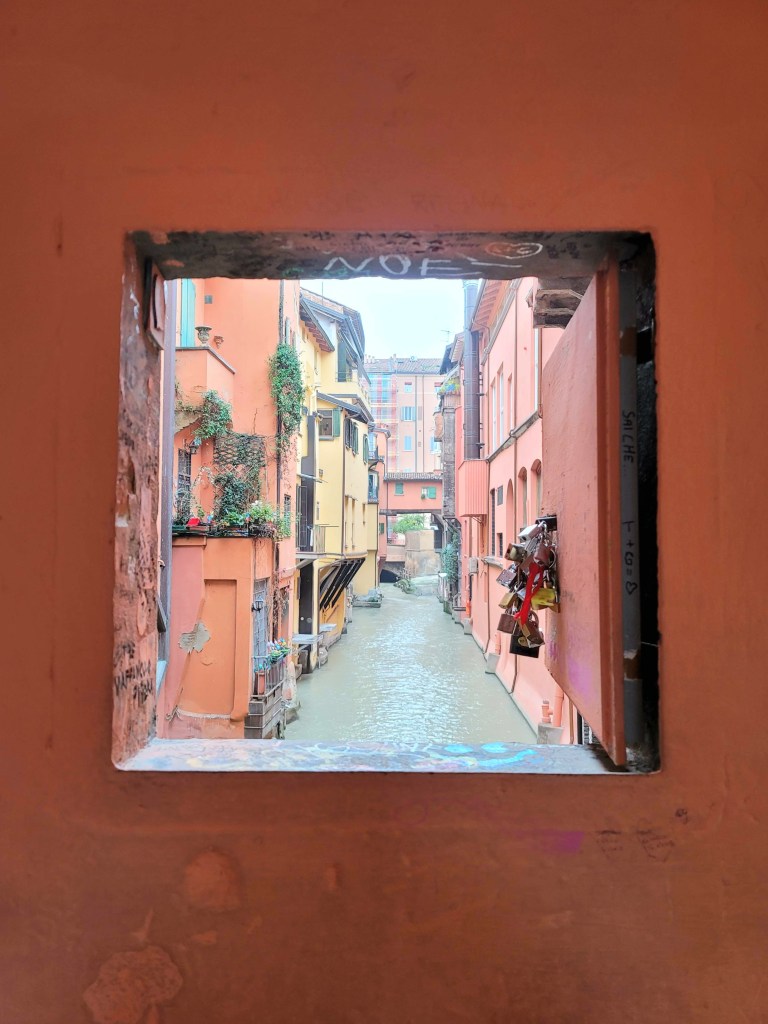
We based ourselves in Bologna for a week in a lovely AirBnB near “Little Venice.” We split our time exploring the city, eating, and day-tripping to other parts of the region.
Around Bologna
Considered the historic capital of the region, Bologna is lively, beautiful, and full of delicious food. The food is why we came to Bologna, so the food is where we’ll start. I’ve highlighted some of the most memorable restaurants and meals that we experienced around the city.
It’s important to note that in Italy, you’ll find three main styles of dining establishments: ristorante, trattoria, and osteria. A ristorante is a full service restaurant, they are more formal and typically have more elegant food– with prices to match. Trattorias are more casual, family-owned places with menus that tend to be more seasonal. Osterias are unassuming places to eat, with simple menus, wine by the decanter, and typically low prices– with one notable exception in Italy, Osteria Francescana (more on that later).
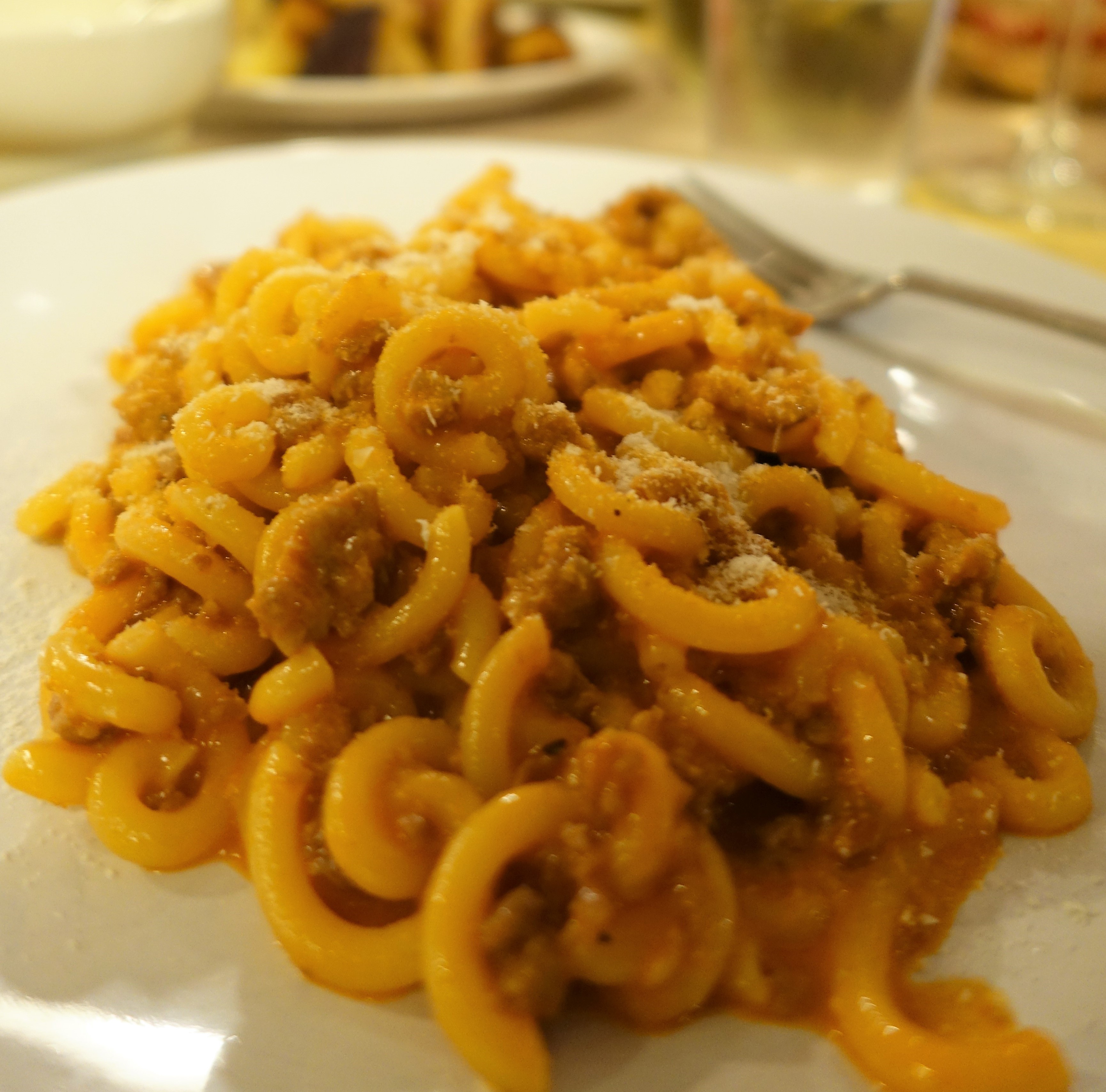
Trattoria Mariposa was a surprise hit for us. We had spent the morning visiting the university and a couple museums. The restaurant that I had chosen for lunch had a line out the door, with a no reservations policy. Cue the hanger. We marched back towards the AirBnB, with David being helpful and suggesting restaurants along the way, while I declared *bravely* that I would just starve. As the suggestions fell on deaf ears, he made the executive decision to go to a small place we had seen on our walks near the apartment, Trattoria Mariposa. The name had stuck out in our heads because “mariposa” is Spanish for butterfly but we were in Italy, so it seemed a bit out of place in a country with so many food rules and traditions. We arrive, are seated quickly, and before I knew it, we had bread and a liter of house white wine. The wines in this region tend to be a bit effervescent, which is great when dealing with rich, fatty food– the bubbles lend a scrubbing effect, leaving your palate cleansed for the next bite. I ordered a tortelloni dish, which was delightful, but the star here was David’s gramigna alla salsiccia. This was day three of a week-long stay in Bologna and we spent the rest of our meals chasing the high of this dish. The pasta had the perfect chew, the sauce was rich and not overly acidic, and the sprinkle of fresh Parmigiano Reggiano added just enough salt– perfection.

Taverna del Postiglione is a ristorante not far from the Piazza Maggiore. The restaurant has beautiful windows to enjoy the hustle in the surrounding portico and the atmosphere is intimate without being stifling. The menu has a good amount of Bolognese heavy-hitters, with seasonal fare thrown in for a good variety. As it was a cold night, I chose a classic: tortellini in brodo. What we often get in the US would be considered tortelloni in Italy. Tortellini are very small stuffed pasta hats and are typically served in chicken broth or cream sauce. David had a roasted rabbit dish which was a welcome change of pace, as rabbit isn’t often on menus at home. We paired our meal with a wine of the region– dry lambrusco, again, the effervescence really takes the wine to another level with a meal.

Osteria dell’Orsa is a simple place near the university that always has a line but the wait is never long. Remember that hanger moment that brought us to Trattoria Mariposa? The line we encountered was for this spot. Along with typical Bolognese specialties, there is a surprising German influence to the menu, with schnitzel and German beers making an appearance. The seating is communal, the cliental is mostly students, and the food is spectacular.
Outside of the mind-boggling food scene, Bologna has plenty of site seeing and shopping to offer. The city is full of covered walkways, called porticoes, which are both a symbol of the city and a UNESCO world heritage site. There are over 60km of porticoes throughout Bologna.

The University of Bologna, founded in 1088, claims to be the oldest continually operating university in the world. The Palace of the Archiginnasio, the original seat of the university, is lovely to wander around and the anatomical theater is not to be missed. The library is also worth a peek and for €3, the visit is a steal.

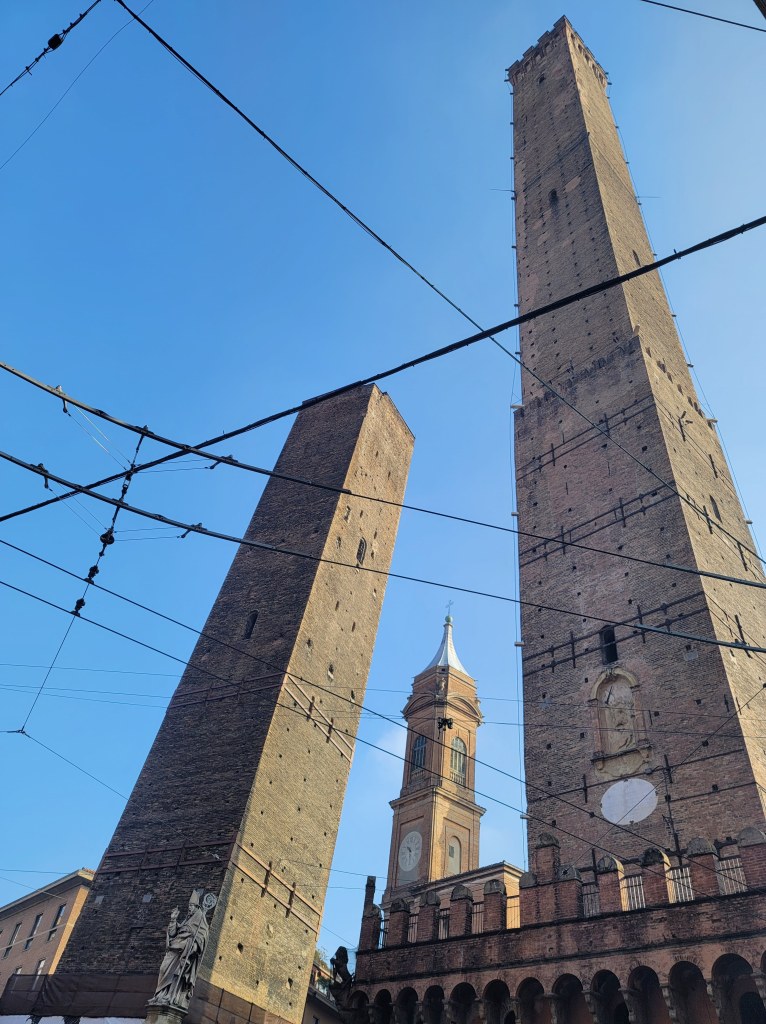
Bologna has three nicknames: La Dotta (the learned), La Grassa (the fat), and La Rossa (the red). The last nickname has been said to have two meanings, red for it’s progressive and left-leaning nature and red for the red rooftops of the city. The rooftops are best seen from above and for that, Bologna offers a challenge: the Asinelli Tower; for €5 you can climb up the 498 steps to the top of the tower for a view over the city. The Asinelli Tower and it’s neighbor, the Garisenda Tower, are leaning symbols of the city and were constructed between 1109-1019. The Garisenda Tower leans 4° (compared to the 3.97° of Pisa) and was partially lowered in the 14th century due to the dangerous lean. At the height of Bologna’s initial building boom, around 1200, the city had 180 towers; today, fewer than 20 towers stand as a result of progress and the area’s seismic activity.
Bologna Breweries
Italy has entered the craft beer world swinging within the past few decades. While not on equal footing in terms of beer culture as other European countries, what has developed is exciting and impressive. As a university town and a center of progressive ideals in Italy, Bologna obviously has a pretty robust beer scene. We chose a few breweries within walking distance of our AirBnB and planned a bottle shop to visit on this trip.
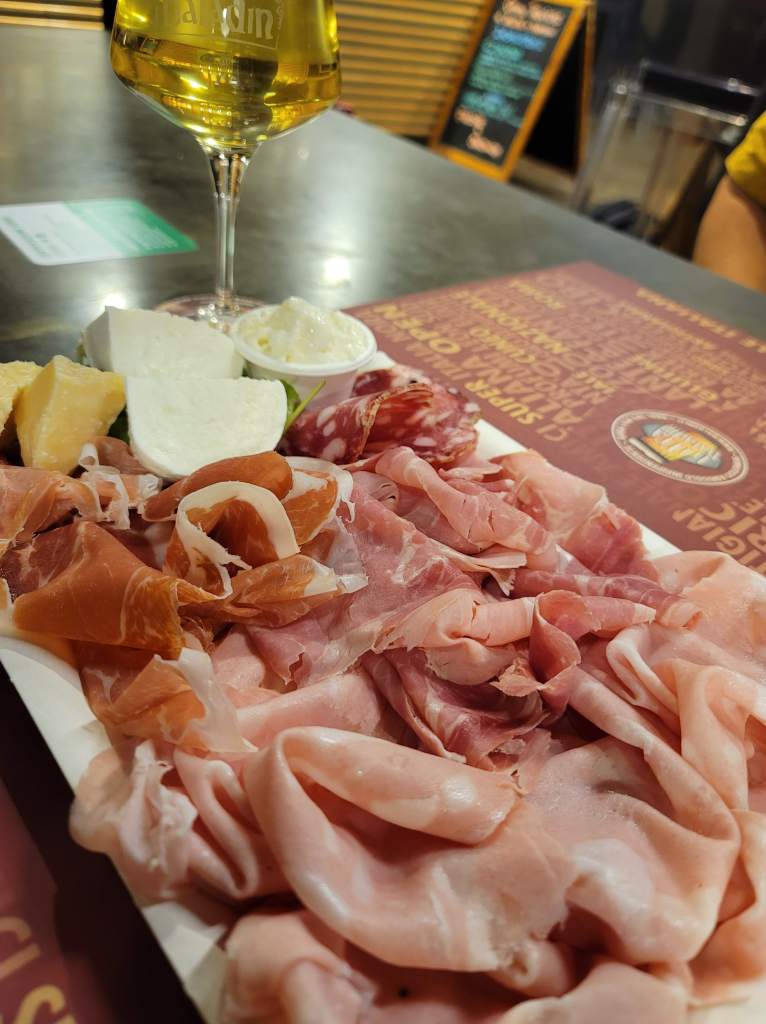
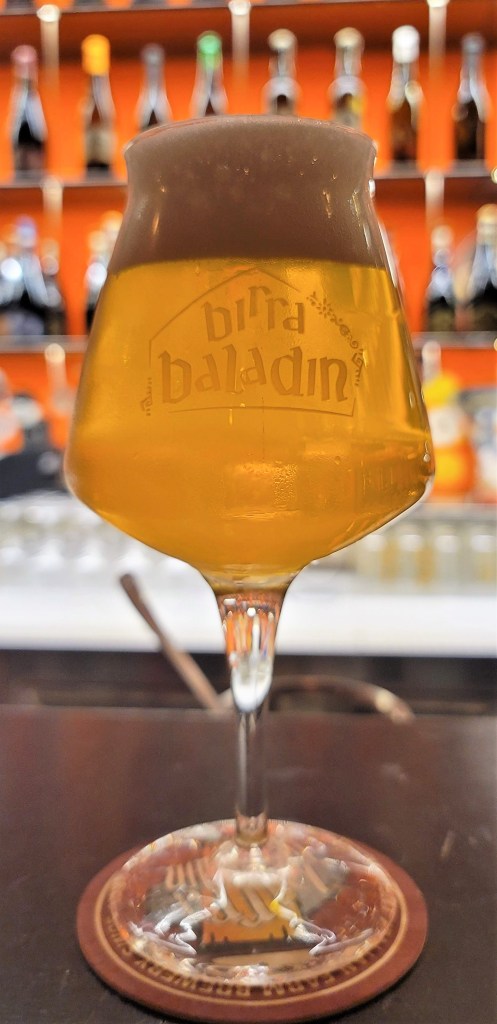
You can’t talk about beer in Italy without talking about talking about Birra Baladin. While it wasn’t the first craft brewery in Italy, that honor goes to Birrificio Italia, Baladin is the most prolific, with restaurants, pubs, and even hotels all over Italy. Baladin has two outposts in Bologona, one in FICO Eataly World (which we chose not to visit), and the other in Mercato di Mezzo. Mercato di Mezzo is one of several food halls in Bologna and the perfect place for a brewery stop. The Baladin bar-front in the market opens into a larger bar/restaurant that spreads out over two floors and serves a full menu. As we had been to a few Baladin concepts before, we decided to enjoy a couple glasses of beer and a charcuterie + cheese board (we’re in Italy, after all). Baladin has consistenly delicious beer and it seems like they are always doing something inventive. They have taken a deep interest in producing Italian Grape Ale– if you are in Italy, make it a point to seek one out. One of my favorite Baladin facts is that they are the inventors of the it-beer glass of our time, the TeKu. The TeKu glass is produced by Rastal and is considered THE glass to drink Italian craft beer from. The glass has made it’s way to the US and you’ll see quite a few breweries selling them and nicer restaurants serving in them.

Via del Pratello is the street for a night out in Bologna. It’s a short walk away from the main center but still in the historic district of the city. On this street you’ll find bars, nightclubs, and an outpost of Zapap Brewery. The space was small but inviting, with plenty of seating outside in the portico. We had just finished dinner, so we didn’t eat but there was a pizza oven and the pies coming out looked delicious. We started with a couple German pilsners, Birra Bologna, and I moved on to the Sick Boy American IPA, which was definitely showing some old-school west coast IPA flavors of pine, resin, and orange peel.

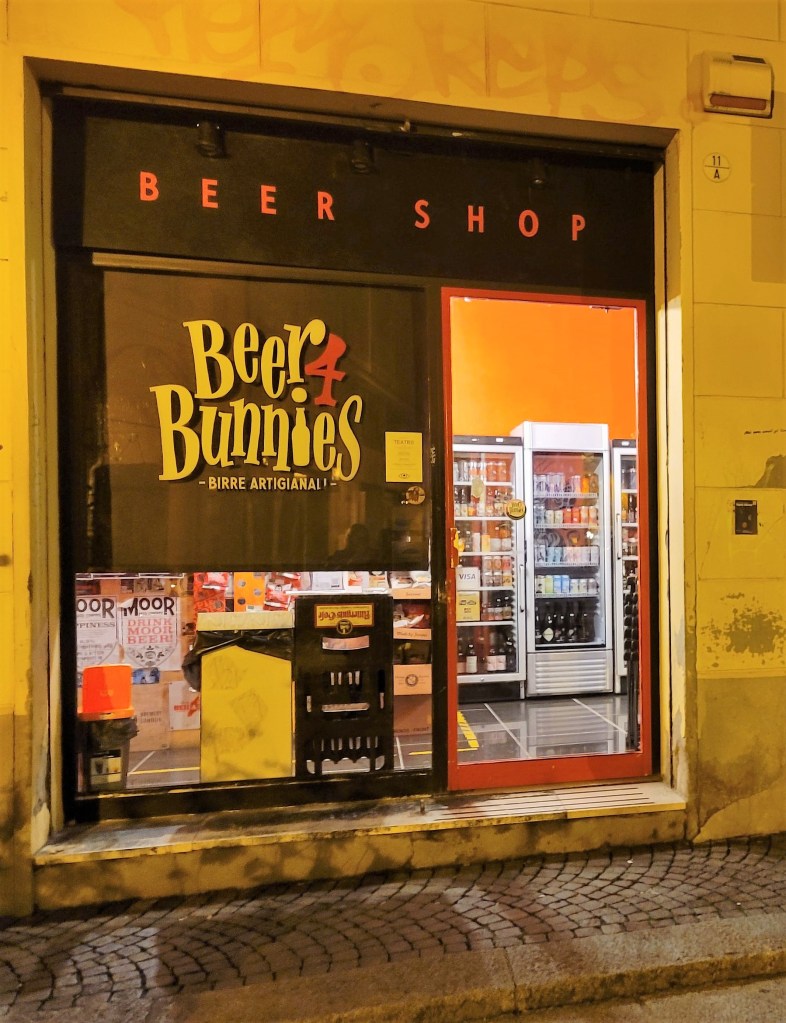
Also on Via del Pratello was a funky bottle shop, Beer 4 Bunnies. Here you can find a huge selection of Italian craft beer, as well as imports from around Europe and the US– we even saw cans from our local craft beer giant, Cigar City.

On the other side of the city center, near the Palazzo Ercolani is Birra Cerqua. The tap room was modest, the atmosphere quiet, and the beer was cold– our kind of place. we enjoyed our beer and the hospitality so much, that we didn’t even get a picture of anything until closing time as we were leaving. The Four Hops (an IPA using Amarillo, Citra, Cascade, and Simcoe hop varietals) was refreshing and was a reminder of why I love craft beer.
Modena
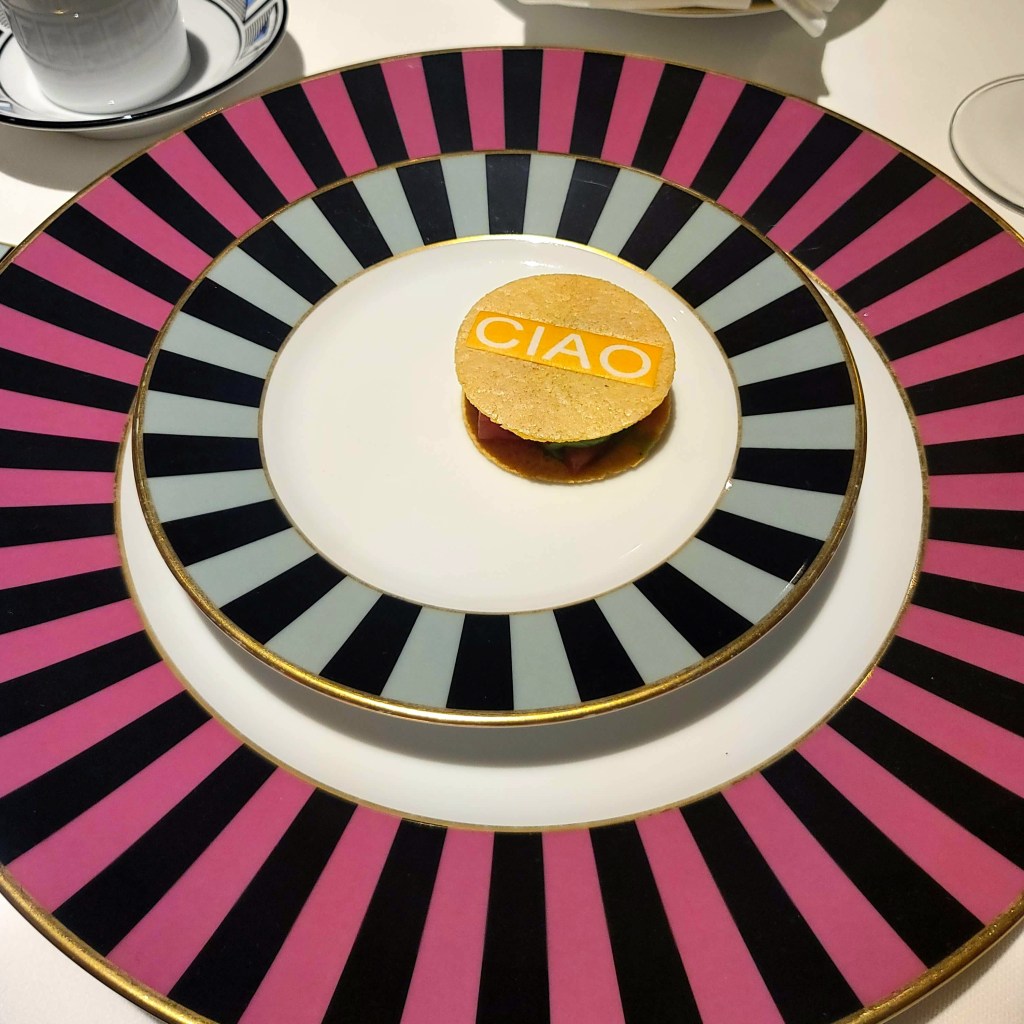
We could not come to this region of the world, without visiting the venerable Osteria Francescana in Modena. Chef Massimo Bottura helms this 3-Michellin-star masterpiece and the worry of snagging a table is the only negative in the whole dining experience. We opted for the tasting menu “With A Little Help From My Friends” and added on the wine pairing. The name of the experience and preparation of the 12-courses are an homage to Italian cuisine and chefs of the last half-century. Each dish was an inventive interpretation of a classic dish by an Italian chef. The drink pairings were well thought out and included a craft vermouth, a wine cocktail, red wine, white wine, and an anisette coffee cocktail. We also started out our meal with champagne but that’s just our style. I would have liked to have one of the many, many Italian craft beers incorporated into the beverage pairing, food and beer are such a great match and it is a shame that the two aren’t highlighted together more.

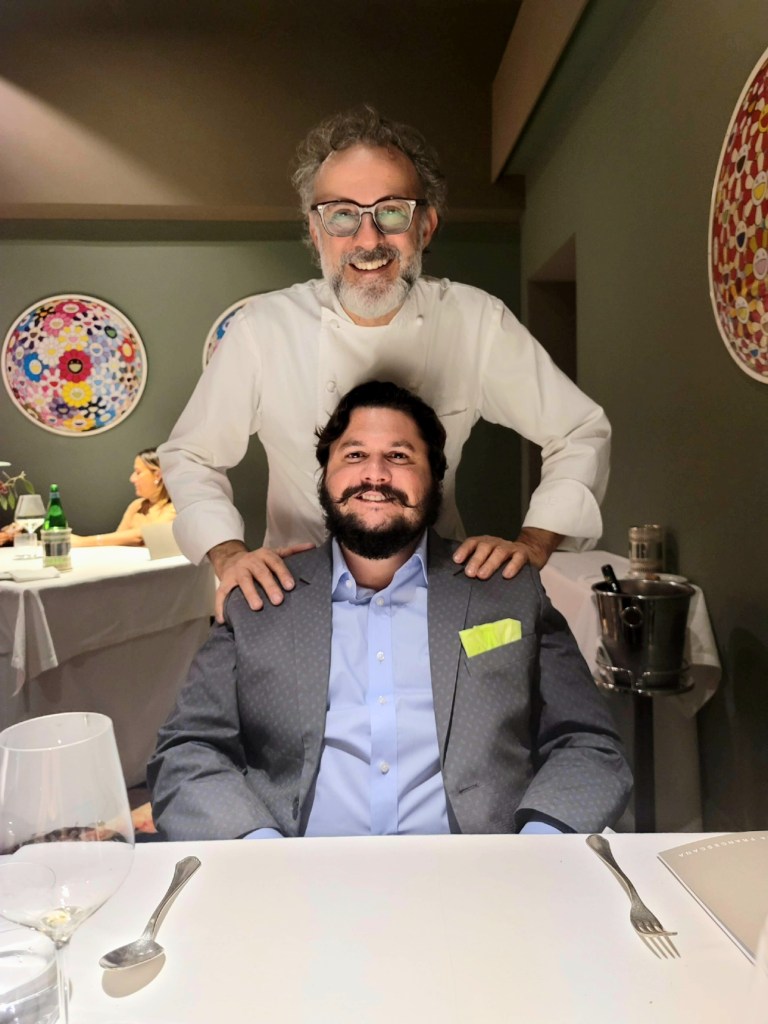
The food was whimsical and the space perfectly tailored to create a modern assault on all of the senses. Chef Massimo is a legend and the world really owes him one for basically single-handedly saving the Parmigiano Reggiano industry after the earthquakes in 2012 (it’s true). Osteria Francescana has been voted the best restaurant in the world so many times that it is now ineligible to be in consideration. A visit to such a venerated house of fare comes with a hefty price tag, though. The tasting menu is €320 and the beverage pairing is an additional €210. I like to look at meals like this as a bit of theater with my dinner and this was one of the best shows that I’ve seen.
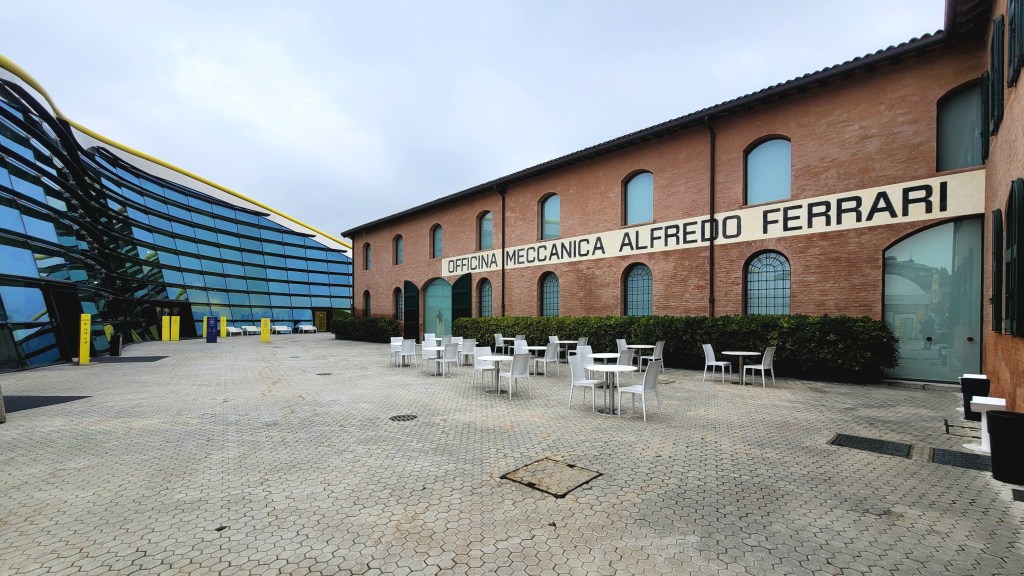
A highlight on our visit to Modena was a trip to the Enzo Ferrari Museum. The museum focuses on the life and work of Enzo Ferrari and is partially housed in his father’s former workshop. The newer building stands where Enzo’s birth home was and houses state of the art exhibitions dedicated to the history of Ferarri and the different cars that Enzo designed. Tickets for the museum are €17 and it is an easy walk from both Modena city center and the train station to the museum.

We did not rent a car for this trip, while some places in the region would have been easier to get to if we had a car, we relied on public or group transportation for the entirety of our trip in and around Emilia-Romagna. The trains between Bologna and Modena runs several times an hour and have varying journey times depending on the number of stops. The fastest train takes 17 minutes between the two and costs ~$4USD for a own-way journey.
#DOP
With a completely free day and the desire to hit the highlights of the region, we set out on a food-focused day trip with Italian Days Food Experience. The company does city-center pickup in Bologna in a small group setting that stops off at factories producing three of the region’s most famous products: Parmigiano Reggiano, balsamic vinegar, and prosciutto.
The tour starts early, with good reason, as Parmigiano Reggiano is made only in the early morning and follows a very strict time-table. Parmigiano Reggiano is a DOP product and DOP products across Europe are highly regulated in ingredients, production, and storage. DOP stands for “Denominazione d’ Origine Protetta” or “Protected Designation of Origin” and guarantees that a product is made in a specific geographical region according to tradition. The Emilia-Romagna region has more than 19 DOP products!

Parmigiano Reggiano has been produced in the are since ~1200AD and is made of just three ingredients: cow’s milk, salt, and rennet. It takes 550L of milk to create one wheel of “parmesan” and each wheel must age for a minimum of 12 months before being inspected by a member of the consortium to be fire-branded with the iconic symbol. The consortium takes this job very seriously – if any of the ingredients come from outside the region, if the cheese isn’t allowed to age the required 12 month minimum, even if the cheese does not sound right – it cannot be called Parmigiano Reggiano.
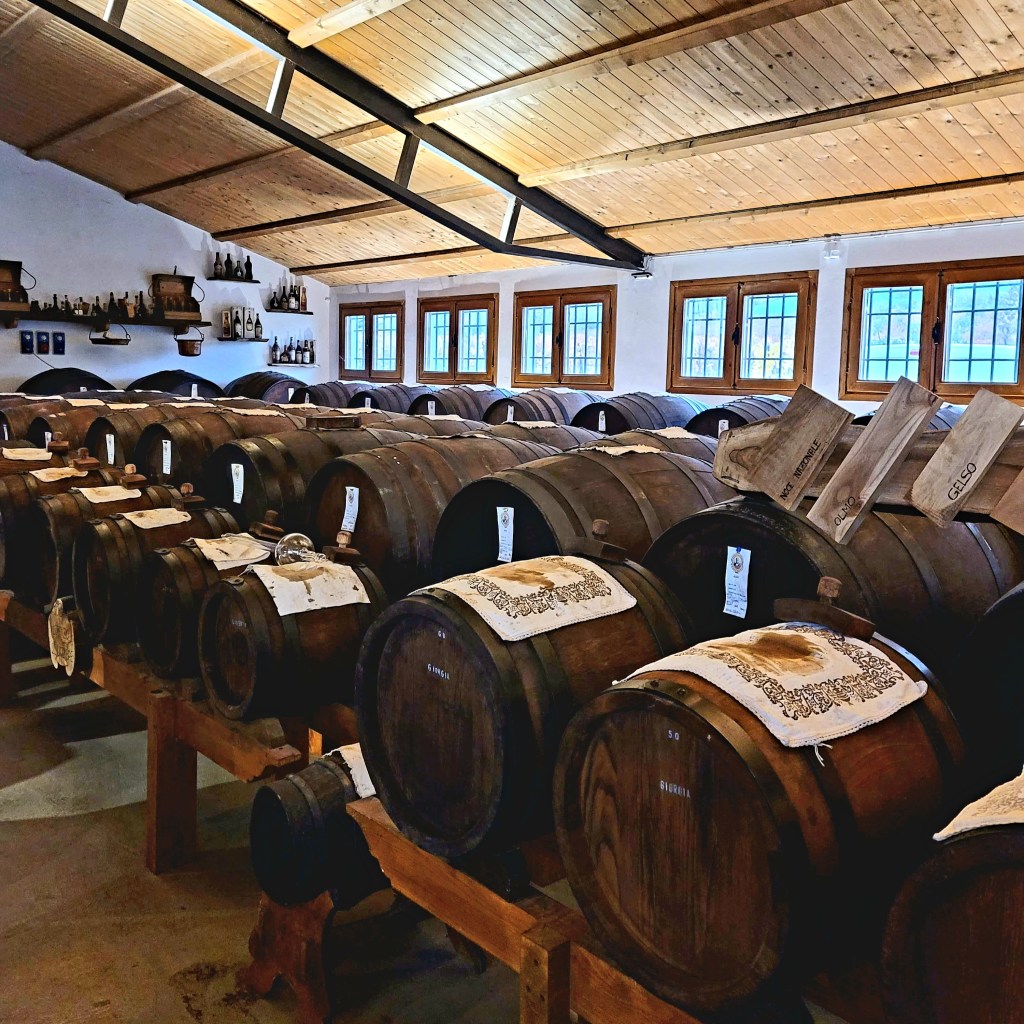
The next stop was a balsamic vinegar producer, Aceetaia Cavedoni. It turns out, what we traditionally think of as balsamic vinegar does not come close to the true “black gold” of Aceto Balsamico di Modena, DOP. Balsamic vinegar should be made of only one ingredient, grape must, and the good stuff ages a minimum of 12 years in a series of successively smaller barrels, called a “batteria.” Each barrel is made out of a different wood (juniper, oak, cherry, etc) and each battery at Acetaia Cavedoni is built when a new member of the family is born. The history and science of balsamic vinegar is very interesting and you can take a deep dive here.

After the tour around the acetaia, we tucked in for what Alessandro called a “breakfast of champions” with tastings of the Parmegiano from Caseificio San Silvestro and balasmic from Acetaia Cavedoni, as well as coffee, bread, cured meats, fresh ricotta cheese with saba (a syrup of reduced grape juice), wine, and just a little grappa.
Our tick on the journey to experience the fruits of the region was a prosciutto factory, Prosciutto di Modena (DOP), to be exact. it was fascinating to see the various stages and aging processes and to learn even more of the food history of the region, including the prosciutto scandal of 2017. After the tour through the factory, we enjoyed a tasting of various cured meats with regional wines and discovered a new favorite– Pignoletto, a lightly sparkling wine that is perfect for cleansing the palate of the fattiness of prosciutto while not overpowering the flavor of the meat.

After our three tours and the “tastings” that accompanied the last two stops, we were served a “light lunch” at Ristorante Bonfiglioli. We started off with gnocco fritto (fried dough, you can’t go wrong), which led into an intense pasta course– tortellini in cream sauce, tagliatelle al ragù, gnocchi, and carbonara. That seems like a good place to stop after a full morning of eating, right? Not in Italy. The meat course followed, roasted beef and pork, I even think I saw some sausages flying past but at this point everything was a food-blur. When asked about the “light lunch,” Alessandro pointed to a light fixture above us and said “there’s the light!” With that joke came dessert: five baked goods and gelato drizzled with balsamic (if you take no other advice from me, do this for yourself at home). We ate and ate until we couldn’t eat any more, then we ate some more, and before we knew it, we were finally rolling back to Bologna.
Final Thoughts
I bought the tickets to Bologna in a sort of post-vacation romance haze; we had just returned from Amalfi and I saw a good deal leaving out of Miami to Bologna– I just so happened to be speaking at a conference in Miami around that time and everything fell together. Outside of serious foodies, Emilia-Romagna isn’t high on most people’s “Europe to-do list” but it really should be. Those looking for a more laid-back Italian experience, outside the hustle of the heavy-hitters (Rome, Florence, Venice), can really fall in love with the country here– whether through your stomach or heart. From the beaches in Rimini, to the ruins dotted throughout the region, to the deep food history, Emilia-Romagna has what you are searching for in an Italian vacation. It is known as the land of “slow food and fast cars,” what more could you want?

 Beer Travelers